
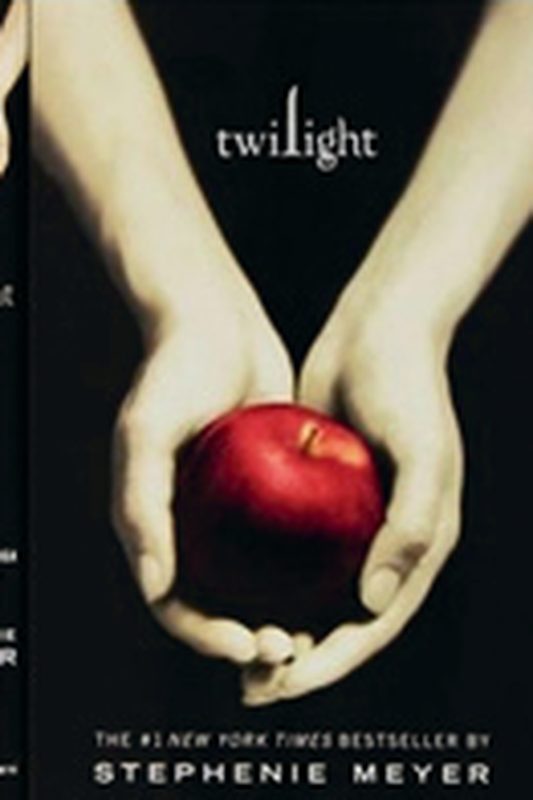
Twilight
2008 · 122 min
2008 feature adaptation of Stephenie Meyer's vampire romance.
Hook & thesis
Catherine Hardwicke’s Twilight translates Stephenie Meyer’s interior teenage longing into a blue-filtered Pacific Northwest dream — a film whose true engine is not vampire lore but the vertigo of first desire seen through a gaze that cannot look away. Verdict: The adaptation succeeds as mood-piece and casting triumph even where it flattens the novel’s moral ambiguity into postcard romance.
The contextual pivot
Released in the autumn of 2008, Twilight arrived at the hinge between YA crossover dominance and the post-Harry Potter hunger for the next franchise — and Hardwicke, fresh from Thirteen, brought an indie sensibility to studio myth-making. The film sits in the supernatural romance lane alongside Interview with the Vampire and later Let the Right One In, but its thesis is gentler: desire as weather, danger as atmosphere. Rosenberg’s screenplay compresses Meyer’s slow-burn interiority into visual shorthand — rain, forest, golden eyes — making the invisible audience both the book’s devoted readers and teenagers who had never touched a 500-page romance. Hardwicke’s body of work suggests a director interested in adolescent intensity; here she bridges niche vampire tropes to mainstream longing without fully committing to the gothic ethics the source eventually demands.
Deep-dive critique
Hardwicke and Davis paint the Pacific Northwest in desaturated blues and silvers, using overcast skies as emotional architecture — a mise-en-scène that externalizes Bella’s dissociation better than the novel’s flat prose sometimes manages. The pacing front-loads meet-cute and withholds explicit threat, mirroring Bella’s denial; this serves the romance thesis but softens the predatory undertow Meyer wrote. Stewart’s Bella is all shoulder-hunch and blink — a performance of withholding that reads as authenticity rather than blankness — while Pattinson’s Edward is a study in controlled tremor, his stillness doing the work dialogue avoids. The baseball sequence, absurd on the page, becomes the film’s most confident set-piece: kinetic, scored by Carter Burwell with playful restraint, it demonstrates how cinema can redeem a novel’s camp without erasing it. Weaknesses accumulate in the final act: James’s pursuit compresses into generic action, and the meadow confession loses the book’s suffocating intimacy when rendered in wide shot. The ending — hospital reunion, prom negotiation — feels studio-safe, trading Meyer’s unsettled hunger for closure the source had not yet earned.
Adaptation ledger
- Kept: Forks atmosphere, first-person desire translated through Stewart’s POV-adjacent framing, Edward’s golden eyes and physical restraint, the Cullen family as tableau
- Altered: Bella’s internal monologue becomes silence and glance; voiceover is minimal, shifting identification to cinematography
- Lost: Much of Bella’s agency in research and self-endangerment; the novel’s explicit moral wrestling with Edward’s nature
- Invented: Extended tree-top confession staging; baseball field spectacle as tonal relief
- Compressed: James/Victoria threat arc — villain function reduced to third-act engine
- Casting as interpretation: Pattinson’s feral glamour redefines Edward from marble god to anxious aesthete
Discussion launchpad
Twilight the film asks whether adaptation should preserve a book’s discomfort or deliver the fantasy its audience came to see — and Hardwicke’s answer is unmistakably the latter, at least in 2008. The polarity that will split a room: Is this a faithful emotional translation or a sanitization of predatory romance into perfume commercial? What remains unsaid is how the film’s visual beauty participates in the same seduction Edward performs — cinema as co-conspirator.
Questions for the room:
- Does Hardwicke’s blue palette critique or romanticize Bella’s dissociation?
- How does casting Pattinson change the ethics of Edward’s stalking versus the page?
- Is the baseball sequence the film’s honest heart or its most cynical commercial beat?
- Would a more faithful adaptation of the novel’s dread have killed the franchise — and should it have?
- Where does Meyer’s book end and Rosenberg’s film begin in defining “Twilight” for a generation?