
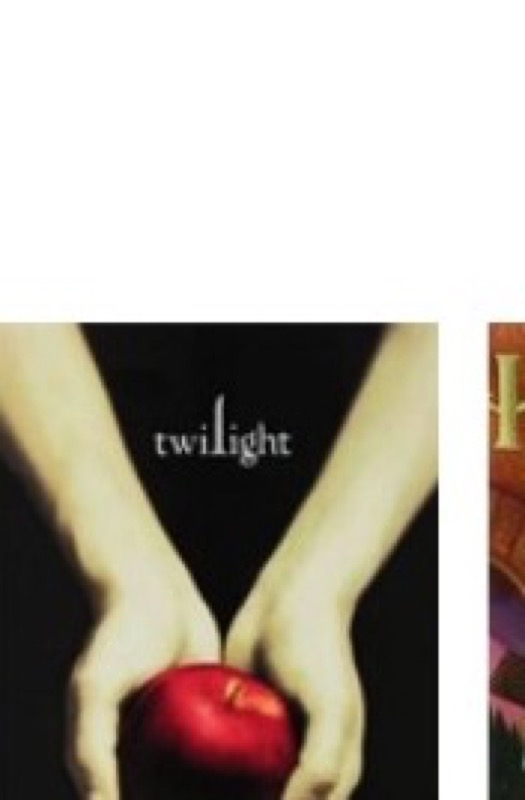
Twilight
Forks, in the rain: a girl who wants, a vampire who won’t — Meyer’s abstinence Gothic, where the wanting is the whole weather.
Hook & thesis
Twilight is a book about wanting, written from inside the wanting. Bella Swan narrates in the present tense of appetite — for the boy, for the world behind him, for an end to being ordinary and mortal and clumsy — and Meyer never steps outside her heroine’s hunger to apologize for it, which is both the novel’s power and the whole twenty-year argument about it. Edward’s restraint is the engine: a vampire romance built on not touching, not taking, not yet. Verdict: It does one thing at full voltage and declines the rest; the cost is everything outside the sealed room of the two of them — school, friends, Bella herself when Edward leaves the page.
The contextual pivot
Twilight was published in 2005, out of a dream Meyer had — a boy and a girl in a meadow, one of them sparkling — and it detonated a market. YA existed as a category before it, but the modern era dates from here: the paranormal-romance shelf, the black covers bearing a single symbolic object, the adult crossover readership, a fandom so large it produced Fifty Shades as fan fiction. It also revived the vampire at a specific angle. Rice’s vampires were decadent adults drowning in eternity; Meyer’s are a family — chaste, abstinent, playing baseball in thunderstorms — the monster domesticated into a boyfriend, which is why the twenty-year argument about this book was never really about vampires. Its true company is the romance tradition it re-energized: the Byronic hero defanged into a high-school senior, desire organized entirely around restraint.
Deep-dive critique
The craft is the voice. Bella narrates in the first person at the temperature of wanting, and Meyer’s refusal to ironize that wanting is the technique everything else depends on — the moment the narration winks, the book dies. The prose is plain to the point of transparency, which reads as simplicity until you notice the pacing it enables: long, slow scenes of almost nothing — a car ride, a biology class, a meadow — held at high emotional pressure, the erotics of delay executed with real discipline. Where the craft thins is the world outside the two of them: Forks is weather and a few names, the human friends are furniture, and James’s tracker plot arrives from a different, lesser novel to give the ending something to do. Edward is less a character than a set of restraints with cheekbones — by design: he is the object, and objects in romance are permitted to be surfaces. The structural honesty is Bella’s. She wants transformation more than safety, says so, and the book — whatever its critics made of it — never punishes her for the wanting itself.
Discussion launchpad
Few novels get tried in public the way this one was — devotion or danger, mirror or model. The book itself is simpler and stranger than either side: an abstinence Gothic about a girl whose desire is the most honest thing in her world.
Questions for the room:
- Edward watches Bella sleep before she can consent to any of it, and the novel frames it as devotion. Where do you land — and does your answer change at seventeen versus now?
- Bella wants, specifically and without embarrassment. In a 2005 YA novel, is the wanting itself the radical act, whatever its object?
- The restraint: Edward’s morality, Meyer’s theology, or simply the best erotics the genre had available?
- Bella has almost no self on the page outside Edward. Failure of characterization — or the truest sentence ever written about being seventeen and consumed?
- The culture judged this book harshly and its imitators kindly. What did Twilight actually do to YA, and what was it blamed for that belongs to its successors?
#LiteraryAnalysis #vampire #paranormal #darkromance #twilight