
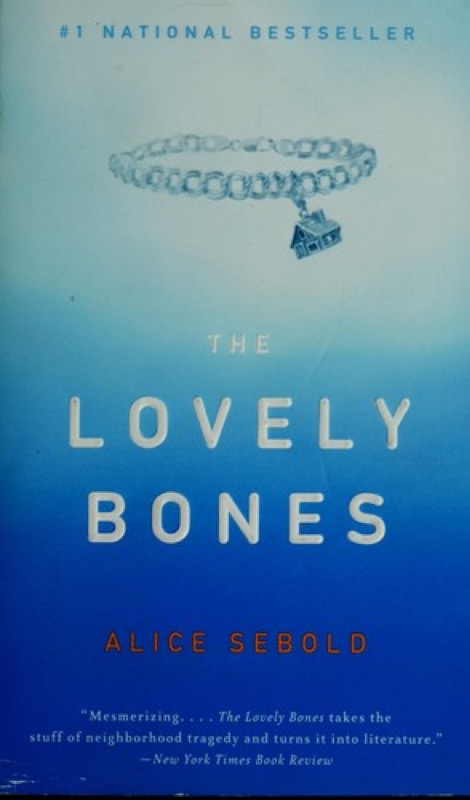
The Lovely Bones
2009 · 135 min
2009 Jackson adaptation of Alice Sebold's afterlife novel.
Hook & thesis
Peter Jackson’s adaptation of Alice Sebold’s The Lovely Bones seeks to navigate the treacherous waters of grief and loss through the lens of an afterlife narrative. Verdict: While visually arresting, the film struggles to encapsulate the profound emotional depth of its source material, ultimately drifting into a realm of superficiality.
The contextual pivot
Set against the backdrop of 2009, The Lovely Bones emerges as a significant piece in the landscape of adaptations that grapple with trauma and family dynamics. Peter Jackson, known for his epic storytelling in The Lord of the Rings, approaches Sebold’s novel with a vision that combines fantastical elements with stark realism. This adaptation arrives at a cultural moment when audiences were increasingly drawn to narratives exploring the darker aspects of humanity, particularly through the lens of a young victim navigating a harsh reality. The invisible audience here comprises those grappling with similar traumas, seeking solace in cinematic narratives.
Deep-dive critique
The film’s structure, oscillating between the ethereal afterlife and the gritty reality of a family mourning, presents both strengths and weaknesses. Cinematographically, Jackson’s use of vibrant colors and surreal visuals in the afterlife sequences diverges from the book’s more understated horror, which often relies on the psychological over the visual. The editing, while fluid, sometimes falters in pacing, leading to a lack of tension that diminishes the weight of the narrative. Saoirse Ronan delivers a poignant performance as Susie Salmon, capturing the innocence of a life cut short, but the supporting performances, particularly by Mark Wahlberg and Rachel Weisz, feel somewhat muted against the film’s larger stylistic choices. The score, composed by Brian Eno, enhances the film’s emotional landscape, though at times it feels overly manipulative rather than organically fitting. The ending, while visually stunning, feels unearned compared to the source material’s haunting conclusion, leaving viewers with a sense of unresolved closure.
Adaptation ledger
- Characterization of Susie Salmon: The film emphasizes her innocence and optimism more than the book, which balances her naivety with darker realities.
- Afterlife representation: Jackson creates a visually rich, dreamlike afterlife that diverges significantly from the novel’s more ambiguous and haunting portrayal.
- Focus on family dynamics: The film glosses over complex family interactions present in the book, resulting in a narrative that leans towards melodrama rather than psychological depth.
- Omission of key themes: Several subplots, such as the exploration of Susie’s friends and their grief, are minimized, thereby losing the collective impact of loss.
- Altered climax: The film’s climax shifts to a more action-oriented resolution, diverging from the somber introspection of the book.
Discussion launchpad
The divergence between the emotional resonance of Sebold’s novel and Jackson’s cinematic interpretation invites a robust dialogue on adaptation fidelity and the essence of storytelling across mediums. Questions for the room:
- How does the film’s visual spectacle affect its emotional impact compared to the novel’s psychological depth?
- In what ways does the adaptation reflect or distort the themes of grief and loss?
- What are the implications of altering character arcs and relationships in adaptations?
- How do audience expectations shape our reception of a film based on beloved literature?
- Does Jackson’s surreal portrayal of the afterlife detract from the real-world horrors depicted in the story?