
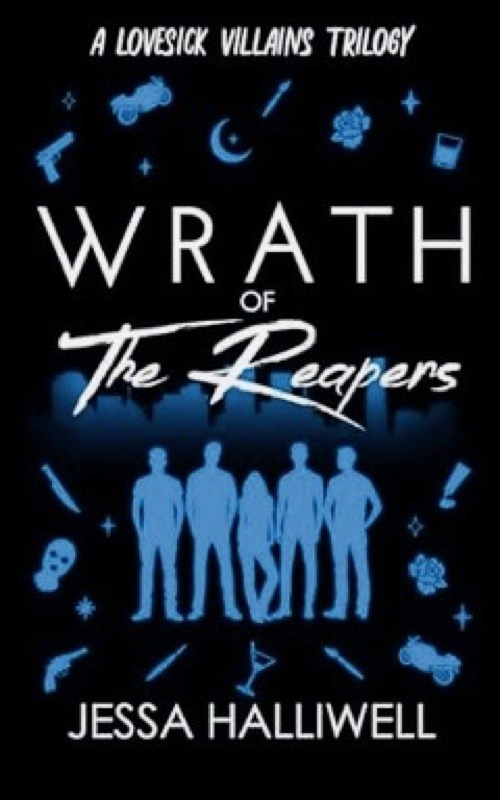
Wrath of the Reapers
A Lovesick Villains Trilogy
Hook & thesis
In Jessa Halliwell’s Wrath of the Reapers, the reader is thrust into a world where love is entwined with violence and desire flirts with danger. The author’s primary objective is to explore the complexities of obsession and the intoxicating pull of morally ambiguous figures in a reverse-harem setup. Verdict: Halliwell masterfully weaves a tale that both seduces and unsettles, leaving readers questioning the very nature of love amidst chaos.
The contextual pivot
This novel sits firmly within the reverse-harem subgenre, yet it stretches the boundaries of dark romance by infusing elements of organized crime and psychological tension. Halliwell’s work appeals to an audience that revels in lovesick villains—those characters whose moral compasses are as twisted as their passions. Unlike more conventional romantic narratives, which may lean toward redemption arcs, Wrath of the Reapers invites readers to indulge in the darker aspects of desire. The novel finds its niche by drawing parallels with authors like Sarah J. Maas and Jennifer Armentrout, yet it dares to tread into grittier territory, making it a bridge for both loyal genre fans and newcomers intrigued by the allure of darker themes.
Deep-dive critique
Halliwell’s structure expertly manipulates pacing, juxtaposing moments of breathless tension with languorous explorations of character motivation. The narrative adopts a close third-person point of view, allowing readers to delve deeply into the psyche of the protagonist while maintaining a tantalizing distance from the reapers themselves—her lovers who are as captivating as they are dangerous. This duality serves the thesis by emphasizing the blurred lines between love and obsession, creating a compelling tension that pulses throughout the text.
Prose-wise, Halliwell excels in crafting vivid imagery that evokes both beauty and brutality, drawing readers into a world where every kiss is laced with the threat of violence. Dialogue crackles, revealing the characters’ manipulative natures while also hinting at their vulnerabilities. However, while the thematic ambition is commendable, the execution sometimes falters; certain plot threads feel rushed, undermining the emotional stakes in pivotal moments. The ending, while dramatic, risks feeling unearned due to the lack of gradual development leading to the climax. Nevertheless, the emotional high-wire act Halliwell performs throughout the book leaves a lingering sense of unresolved tension that adds to its allure.
Discussion launchpad
This novel invites a spectrum of reactions, particularly concerning the morality of the characters and the nature of their relationships. The tension between love and manipulation is palpable, raising questions about what constitutes a healthy relationship versus one rooted in obsession or power dynamics.
Questions for the room:
- How do you feel about the portrayal of morally ambiguous characters in romance? Does it enhance or detract from the love story?
- In what ways do you think the reverse-harem dynamic alters our perception of traditional romantic tropes?
- Is the violence depicted in the narrative justified by the emotional stakes of the characters?
- How do Halliwell’s choices in prose and structure affect your engagement with the characters?
- What unresolved themes linger for you after reading, and how do they impact your overall interpretation of the book?
#TheOrchidRoom #reverseharem #darkromance #lovesickvillains #JessaHalliwell