
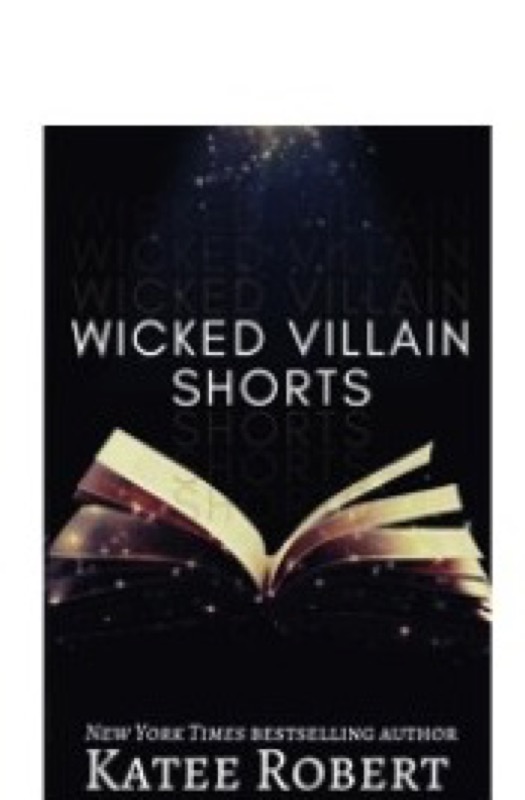
Wicked Villain Shorts
Hook & thesis
Katee Robert’s Wicked Villain Shorts breathes new life into the trope of villainy through a series of tantalizing retellings that explore the intricate dynamics of desire and power. Verdict: This anthology challenges readers to embrace the chaos of love intertwined with wickedness, inviting them to revel in the dark seduction of its protagonists.
The contextual pivot
Situated firmly within the enemies-to-lovers subgenre, Robert’s work navigates a landscape rich with mythological references, reimagining well-known characters through a lens of complexity and moral ambiguity. Unlike traditional romances that often sanitize villainous personas, Robert’s stories delve deep into the darkness, capturing the essence of desire that thrives in conflict. This collection not only appeals to dedicated followers of dark romance but also has the potential to bridge the gap for general readers seeking a fresh twist on familiar tales. It stands alongside works by authors like Sarah J. Maas and Holly Black, who similarly intertwine romance with darker themes but perhaps do not embrace the same level of explicitness and moral complexity.
Deep-dive critique
The structure of Wicked Villain Shorts is key to its magnetic pull; each story is a compact exploration of lust and vengeance, tightly woven to keep the reader entranced with minimal fluff. Robert employs a third-person limited POV that dips into the minds of her characters, allowing the reader to savor their conflicting emotions and desires. The pacing is swift, propelling the stories forward like a rollercoaster of passion and treachery, delivering a visceral experience that mirrors the intense relationships portrayed.
However, the anthology is not without its mechanical flaws. Certain stories, while rich in atmosphere, occasionally prioritize shock value over depth, leaving some character arcs feeling underdeveloped. For instance, while the dialogue crackles with tension, it sometimes veers into predictable banter that detracts from the otherwise darkly romantic tone. Yet, the thematic exploration of power imbalances is particularly striking, as the characters navigate their attraction within the confines of betrayal and moral ambiguity, crafting a landscape that teeters on the brink of danger.
The endings, while often steered toward resolution, do not shy away from ambiguity, leaving the reader grappling with the implications of love and wickedness intertwined. This is where Robert shines — she invites us to question the nature of attraction and the roles we assign to villains and heroes.
Discussion launchpad
The anthology’s provocative themes are bound to elicit mixed reactions, making for a lively discussion.
- The tension between morality and desire: Can we truly root for characters who embody both love and villainy?
- The effectiveness of retelling familiar myths: Do these stories add depth to the originals or merely exploit their established narratives?
- The representation of power dynamics in romantic relationships: Are these portrayals empowering or problematic?
Questions for the room:
- How do you feel about the portrayal of villains as romantic leads?
- Do you think the exploration of power imbalance enhances or detracts from the stories?
- Which story resonated with you the most, and why?
- How does Robert’s use of dialogue serve to heighten the tension in these relationships?
- In what ways do the endings affect your overall perception of the characters?
#TheOrchidRoom #WickedVillainShorts #darkromance #enemiestolovers #literaryanalysis