
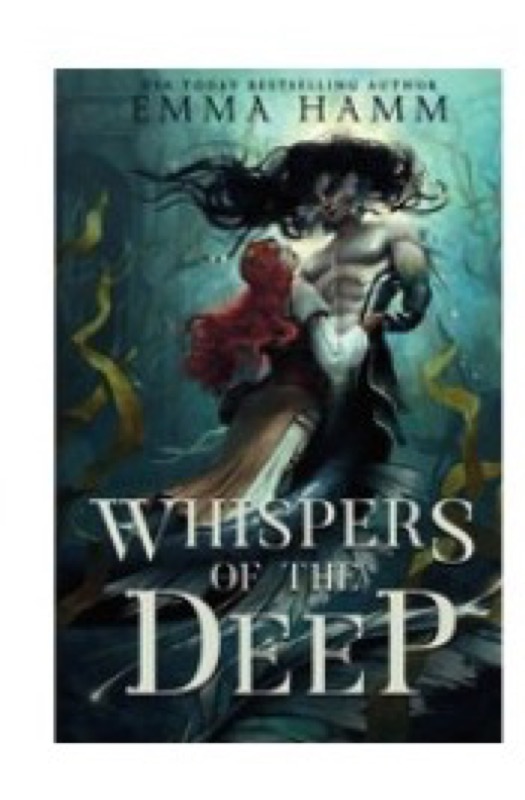
Whispers of the Deep
Hook & thesis
“Whispers of the Deep” by Emma Hamm delves into the murky waters of desire and fear, exploring the complexities of love forged in darkness. Verdict: The book is a haunting examination of the intersections between captivity and intimacy that lingers long after the final page.
The contextual pivot
Occupying a niche within the fantasy-romance genre, Hamm’s work sits comfortably alongside authors like Sarah J. Maas and Jennifer L. Armentrout, yet pushes boundaries with its darker undertones and unsettling themes of confinement and choice. With its captivating blend of merman mythology and romance, the narrative straddles the line between niche appeal and broader market accessibility, inviting both lovers of monster romance and more general fantasy readers to explore its depths. This book resonates particularly with those who find allure in perilous love stories, yet it also challenges conventional romantic tropes, making it a riveting read for those unafraid of a darker heart.
Deep-dive critique
Hamm’s craft excels in blending lyrical prose with the visceral, creating a world that is both enchanting and claustrophobic. The first-person perspective immerses readers in the protagonist’s psyche, allowing for an intimate connection with her struggle between longing and revulsion. The pacing, however, occasionally falters; moments of tension are sometimes stretched, detracting from the urgency of the central conflict. The thematic exploration of captivity—both physical and emotional—serves as the engine of the narrative, pushing characters toward moments of raw vulnerability.
Dialogue feels organic, effectively revealing character motivations and desires, yet at times can veer toward melodrama, which may alienate some readers seeking a more nuanced interaction. The underwater setting is richly constructed, making the ocean a character in its own right, though it sometimes leans too heavily on tropes of the mystical rather than grounding itself in the emotional realities of the characters’ situations. The climax, while resonant, raises questions about the characters’ growth—whether their experiences lead to true transformation or merely repetition of familiar patterns. Ultimately, the ending feels earned but leaves lingering ambiguity that invites reflection rather than closure.
Discussion launchpad
The novel’s exploration of captivity and consent, set against an enchanting yet perilous backdrop, raises significant questions about the nature of love and power dynamics within relationships. Some readers may revel in the tension, while others might find it troubling.
Questions for the room:
- How do you perceive the balance between romance and the darker elements present in the story?
- In what ways does Hamm’s portrayal of captivity challenge traditional romantic narratives?
- Does the underwater setting enhance or detract from the emotional stakes of the characters?
- How do you interpret the ending in terms of character development and thematic resolution?
- What does the novel suggest about the nature of desire in contexts of power imbalance?
#TheOrchidRoom #fantasyromance #darkromance #monsterromance #literaryanalysis