
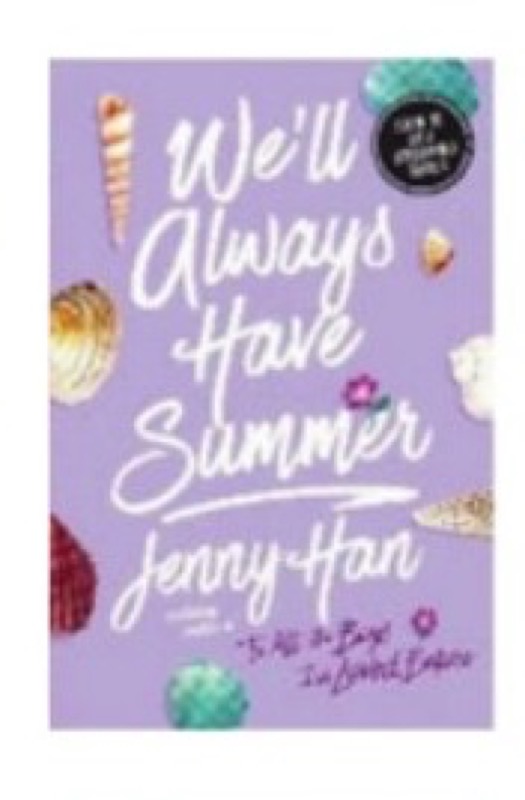
We'll Always Have Summer
Hook & thesis
Jenny Han’s We’ll Always Have Summer deftly navigates the tumultuous waters of forbidden love, revealing the poignant complexities of choice and consequence in the throes of young desire. Verdict: This novel masterfully exposes how love can become a double-edged sword, carving paths both toward ecstasy and heartache.
The contextual pivot
Situated within the forbidden-love subgenre, Han’s work resonates deeply with the youthful angst present in contemporary YA literature. It mirrors the stylistic poignancy found in authors such as John Green and Sarah Dessen, yet it intertwines a darker, more obsessive undercurrent that elevates it beyond mere teenage romance. The invisible audience here is that of emotionally-introspective young adults, likely navigating their own tangled relationships, making the book not just relatable but also a bridge between niche tropes and a broader readership yearning for depth amid the sweetness of youth.
Deep-dive critique
The novel’s structure, with its alternating perspectives, enhances the emotional stakes, allowing readers to delve into the conflicting hearts of its protagonists. This choice of multiple points of view amplifies the central theme of miscommunication and the often-painful nature of love, effectively setting up rich dramatic tension. Han’s prose is evocative yet accessible, inviting readers to feel the visceral pull of desire while also capturing the dissonance inherent in the characters’ choices. The dialogue, while occasionally veering into cliché, serves to illustrate the characters’ emotional turmoil, grounding their experiences in a sense of reality that is both relatable and haunting.
However, the pacing can falter, particularly in the latter sections where the resolution feels somewhat rushed compared to the careful build-up of earlier chapters. This uneven ending, while thematically consistent—reflecting the chaos of young love—leaves a lingering sense of dissonance, as if the narrative rushes to wrap up the complex emotions rather than allowing them the time they deserve to simmer. Ultimately, the ending, while thematically potent, risks feeling unearned for readers craving closure in the tangled web of its love story.
Discussion launchpad
The exploration of forbidden love and its consequences invites heated debate, particularly regarding character agency and the notion of true love versus infatuation.
Questions for the room:
- Do the characters’ choices reflect genuine love, or are they merely a product of youthful obsession?
- How does the use of multiple perspectives affect your empathy for each character?
- Is the ending satisfactory, or does it undermine the emotional investment built throughout the novel?
- In what ways does Han challenge or reinforce stereotypes about young love in this narrative?
- How does the exploration of forbidden love resonate with contemporary societal norms and expectations?
#TheOrchidRoom #forbiddenlove #darkromance #YA #literaryanalysis