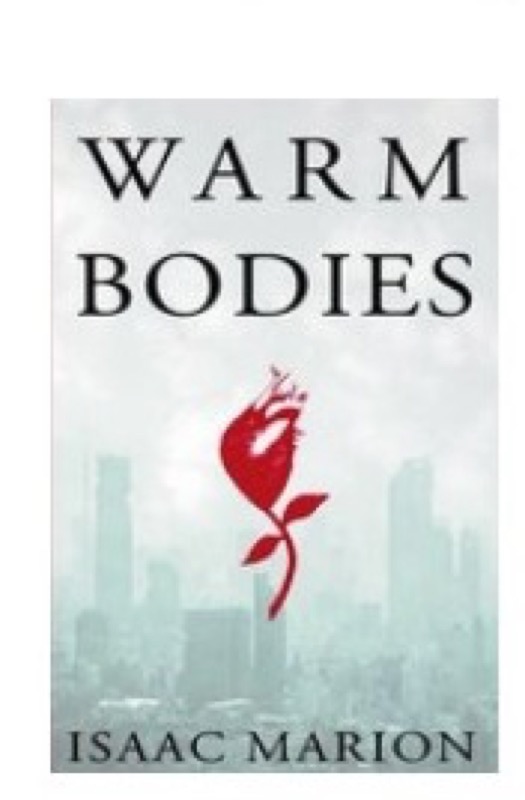
Warm Bodies
A zombie who collects vinyl and can’t remember his own name eats a young man’s brain, inherits his memories of a girl named Julie, and starts — impossibly — to wake up.
Hook & thesis
Warm Bodies is Romeo and Juliet with the houses replaced by species: R and Julie, a feud between the living and the dead, and Perry — the boyfriend R kills and eats in the first act — lingering on as Mercutio and chorus inside R’s skull. Marion’s central device is the zombie’s point of view: R’s narration is eloquent, funny, existentially miserable, while his spoken vocabulary runs to about six syllables, and the gap between the inner man and the shambling corpse is the book’s whole argument about how the living misread the dead — and each other. Eating brains here is how zombies take memory and feeling: a drug, a sacrament, and a haunting, since Perry doesn’t entirely leave. Verdict: The rare paranormal romance with a genuine metaphysics — love as a contagion running death’s film backward. Its cost is the cure’s mechanics, vaporous at exactly the moments the plot needs them solid, and a final act that resolves by vibe what it set up by biology.
The contextual pivot
Warm Bodies grew out of a short story, ‘I Am a Zombie Filled with Love,’ that Marion posted online; the novel arrived in 2011, at the crest of the zombie decade — The Walking Dead ascendant, the culture’s apocalypse of choice running strong — and directly against its grain. Where the genre’s energy went to survivalism and headshots, Marion wrote a zombie novel about apathy: his undead aren’t rage or hunger incarnate but people who stopped feeling anything, shuffling through an airport the way the living shuffle through their commutes, while his living holdout is a militarized stadium. The Romeo and Juliet scaffolding is worn openly — R, Julie, a balcony, a feud between the houses of living and dead — and the 2013 film, charming and softer, carried the premise to a wide audience that mostly never learned there was a book with stranger ambitions: a metaphysics of contagion in which love, not violence, is the thing that spreads.
Deep-dive critique
The narration is a single first person — R’s — and the census of voices matters: Perry, the boyfriend R kills and eats, is not a co-narrator but a haunting inside the narration, his memories arriving as seizures of borrowed life that R experiences in a confusion of persons. Marion’s central technical trick is the gap between that narration and R’s speech: the interior voice is literate, wry, philosophically miserable — full sentences, record collections, existential dread — while the mouth produces grunts and, eventually, a syllable at a time, so the reader lives inside the exact misreading the book is about. The prose style is the argument performed: lush interiority trapped in a failing body. Structurally the book is a resurrection told in stages — speech, dreams, bleeding, a heartbeat — each stage a small scene rather than an exposition dump, which is why the cure’s vagueness mostly gets away with it: the mechanics are emotional before they are biological, by design. The flaws are real: the Boneys are an allegory in search of a character; Julie is more catalyst than person for long stretches, her inner life arriving late and through Perry’s memories — the consent problem wearing a dress; and the ending resolves a war by atmosphere. But the strangeness is genuine: this is the zombie novel whose horror is that the monsters might wake up and have to live with what they ate.
Discussion launchpad
R falls for Julie through her dead boyfriend’s memories. The romance works — the book makes sure of it — and underneath it sits a question about inheritance, consent, and who is doing the loving.
Questions for the room:
- Whose love is it, R’s or Perry’s — and does Julie ever learn the terms?
- R killed Perry, and the book asks you to root for the murderer. How does Marion earn that — or does he?
- The cure spreads by feeling: dreams, photographs, wanting. Is the vagueness a flaw in the mechanism, or the thesis — feeling precedes explanation?
- The Boneys, skeletons who gave up, enforce the old order and fear the change. In the book’s allegory, are they death itself — or every institution that prefers the world ended?
- R’s inner voice is a poet; his mouth can barely say Julie. Who else in this book is misread from the outside — and by whom?