
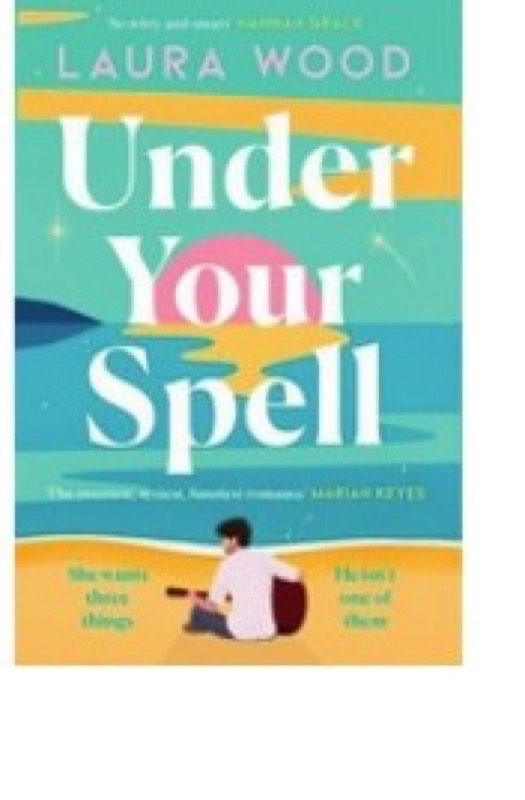
Under Your Spell
She wants three things. He isn't one of them.
Hook & thesis
In Under Your Spell, Laura Wood crafts a hauntingly alluring enemies-to-lovers narrative that intertwines desire, rivalry, and self-discovery. Verdict: This book is a tantalizing exploration of the complexities of love and enmity, revealing that what we resist often defines us.
The contextual pivot
Nestled within the cozy yet tumultuous genre of enemies-to-lovers romance, Wood’s work draws from a rich tradition of British literature that balances wit with emotional depth. While it echoes the playful animosity found in classics by authors like Jane Austen, it also flirts with darker themes reminiscent of contemporary romantic dramas. The book stands at the intersection of niche romantic tropes and broader appeal, inviting readers who relish the tension of opposites to embrace a story that is as much about the characters’ internal struggles as it is about their external conflicts.
Deep-dive critique
Wood’s narrative unfolds through a meticulously crafted structure that enhances the tension and pacing of the romance. The dual perspectives offer insight into the protagonists’ motivations, allowing readers to engage deeply with their conflicting desires. This choice of point-of-view not only enriches the character development but also establishes a palpable push-and-pull dynamic that is central to the theme.
The prose is laced with a lyrical quality that captures the essence of longing and animosity. For instance, Wood’s use of evocative imagery when describing the coastal setting mirrors the tumult of the characters’ relationship, suggesting that the external landscape reflects their internal states. Dialogue crackles with wit and resentment, effectively showcasing the characters’ evolution from rivals to reluctant allies. However, the pacing does falter in moments, particularly in the middle sections where the tension occasionally dissipates, risking reader engagement.
Moreover, the thematic exploration of desire—how it can be born from conflict—gives the narrative depth. The ending, while satisfying, raises questions about whether the transformation of the characters feels fully earned or if it skirts the complexity of their initial animosity. Such moments provoke reflection on whether love can truly emerge from darkness without compromising authenticity.
Discussion launchpad
Wood’s work invites a spectrum of interpretations, particularly regarding the nature of love born from rivalry. The tension between love and hate is fertile ground for debate, as it questions the boundaries of attraction and the role of conflict in romance.
Questions for the room:
- Does the enemies-to-lovers trope romanticize toxic relationships, or does it offer a nuanced view of personal growth?
- How effectively does Wood balance the darkness of conflict with the lightness of romantic tension?
- In what ways do the characters’ transformations challenge or reinforce traditional romantic tropes?
- Is the resolution of their conflict sufficient, or does it gloss over deeper issues?
- How does the setting influence the characters’ emotional journey throughout the narrative?
#TheOrchidRoom #enemiestolovers #darkromance #British #literaryanalysis