
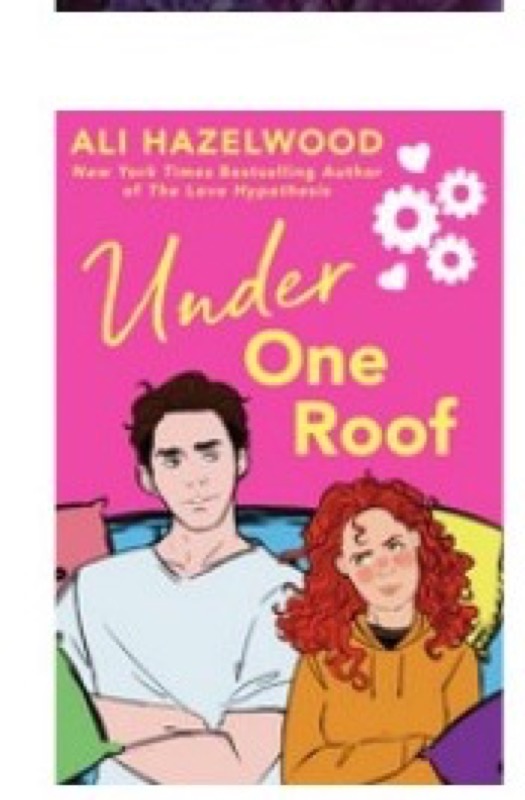
Under One Roof
Hook & thesis
In Under One Roof, Ali Hazelwood deftly intertwines the enemies-to-lovers trope with a narrative enriched by the complexities of grief and personal ambition. Verdict: This novella elegantly showcases how love can emerge from the ashes of resentment, making it an essential read for those who appreciate nuanced character dynamics paired with STEM themes.
The contextual pivot
Hazelwood’s work resides comfortably within the contemporary romance genre, particularly the subcategory of enemies-to-lovers, which has gained traction in recent years among readers seeking both humor and heartfelt connection. Unlike more traditional narratives that often focus solely on romantic tension, Hazelwood explores a distinctly modern premise where professional rivalry and personal history collide, appealing to a demographic that thrives on both STEM elements and emotional depth. This novella bridges niche tropes, presenting them in a manner that resonates with both dedicated genre fans and a broader audience, demonstrating the author’s ability to craft engaging narratives without alienating the uninitiated.
Deep-dive critique
The novella is structured around a tight timeline that emphasizes the forced proximity of the protagonists, a device that serves to heighten tension and explore the characters’ emotional landscapes. Hazelwood employs a dual POV, which not only allows readers to navigate the internal conflicts of both leads but also deepens the exploration of their respective griefs—one stemming from professional loss, the other from familial ties. This duality is where the narrative excels, as it provides a rich psychological backdrop against which their antagonism can flourish before transforming into desire.
The prose is sharp and witty, pulling readers into the world of academia and the complexities of personal ambition. Dialogue crackles with tension, effectively revealing character traits and underlying motivations without feeling forced. However, while the pacing is generally tight, there are moments where the emotional beats could have been drawn out for greater impact. For instance, the resolution may feel somewhat rushed, leaving the reader longing for a more substantial culmination of the leads’ growth and reconciliation. Despite this, the ending remains satisfying, capturing the essence of their journey from conflict to connection.
Discussion launchpad
Under One Roof invites readers to dissect the interplay between personal ambition and romantic entanglement, particularly how grief shapes our relationships. A few polarizing elements are ripe for discussion:
- The balance between humor and emotional depth: Does Hazelwood achieve a harmonious blend, or do the comedic elements detract from the more serious themes?
- Characterization of the protagonists: Are they fully realized, or do they lean too heavily on archetypes typical of the genre?
- The novella’s pacing and emotional resolution: Does the rapid conclusion undermine the development of the romantic arc?
Questions for the room:
- How do the themes of grief and ambition resonate with your personal experiences in relationships?
- In what ways do you think the STEM setting enhances or complicates the romantic narrative?
- Do you find the enemies-to-lovers trope stale or revitalized in this context?
- How important is the resolution in a novella compared to a full-length novel?
#TheOrchidRoom #enemiestolovers #darkromance #STEMromance #darkheartlabs