
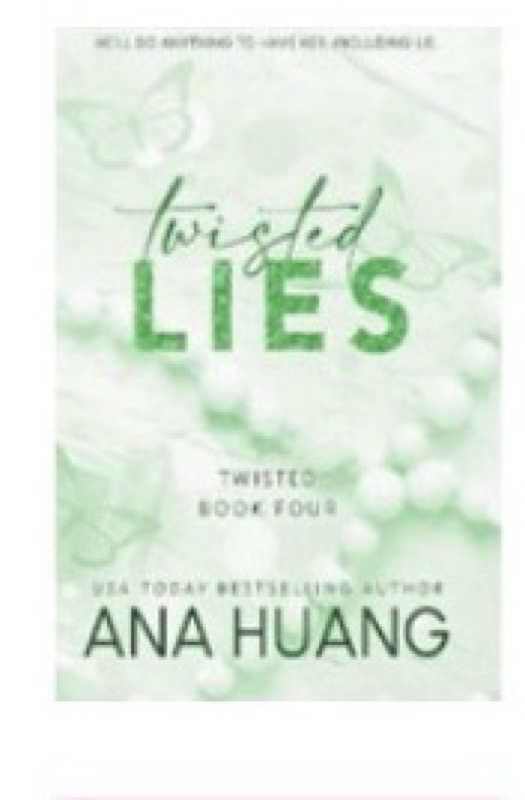
Twisted Lies
He'll do anything to have her. Including lie.
Hook & thesis
In Ana Huang’s Twisted Lies, the intricate dance between obsession and desire reveals a chilling exploration of power dynamics cloaked in the guise of romance. Verdict: This novel masterfully entwines the reader in a web of manipulation and yearning that transcends conventional romantic tropes, inviting us to question the very nature of love.
The contextual pivot
Nestled within the stalker-obsession subgenre, Huang’s work evokes echoes of contemporary titans such as Anna Zaires and Tessa Bailey, who similarly delve into the darker recesses of romance. This book captures a niche audience that thrives on transgressive themes while also attempting to bridge the gap to mainstream readers through its accessible prose and engaging character arcs. The invisible audience is drawn to the thrill of danger paired with the allure of wealth, as depicted through its billionaire archetypes, making it a provocative entry in the modern dark romance landscape.
Deep-dive critique
Huang’s narrative is structured to heighten tension, employing a close third-person point of view that immerses the reader in the protagonist’s psyche. This technique magnifies the intensity of the emotional stakes, as we oscillate between desire and fear. The pacing, particularly in the first half, is deliberate, allowing the simmering tension to build slowly, creating an atmosphere charged with anticipation. However, this choice risks alienating readers who crave immediate gratification; the payoff, however, is a thoroughly earned climax that feels both shocking and inevitable.
Characterization shines through Huang’s deft dialogue, which crackles with subtext. Each interaction is layered with unspoken desires and unacknowledged truths, particularly between the protagonist and her enigmatic suitor. The dialogue serves as a mirror to their complicated relationship, where every word is laced with a tension that oscillates between flirtation and threat. However, certain supporting characters appear underdeveloped, serving as mere foils rather than fully realized persons, which could detract from the overall emotional heft of the story.
Thematically, Twisted Lies interrogates the line between love and possession. Huang successfully navigates the treacherous waters of consent and manipulation, confronting the reader with uncomfortable questions about what we deem romantic. Yet, there are moments where the narrative leans too heavily into cliché, particularly in its portrayal of wealth as a solution to emotional turmoil. The final act, while dramatic, occasionally veers into predictability, leaving some narrative threads tantalizingly unresolved, which could frustrate readers seeking closure.
Discussion launchpad
Huang’s novel lays bare polarities that provoke deep discussion: the thrill of obsession versus the horror of manipulation, and the romanticization of wealth against the backdrop of ethical quandaries. This duality invites a rich exploration of reader morals and preferences.
Questions for the room:
- How do you perceive the balance between romantic tension and ethical dilemmas in dark romance?
- Can obsession ever be portrayed in a way that is genuinely romantic, or does it inherently require a critical lens?
- To what extent does wealth influence our perception of characters’ actions in romance narratives?
- Are the supporting characters adequately fleshed out to reflect or challenge the protagonist’s journey, or do they fall into stereotype?
- What unresolved questions about manipulation and consent linger after reading?
#TheOrchidRoom #TwistedLies #AnaHuang #DarkRomance #LiteraryAnalysis