
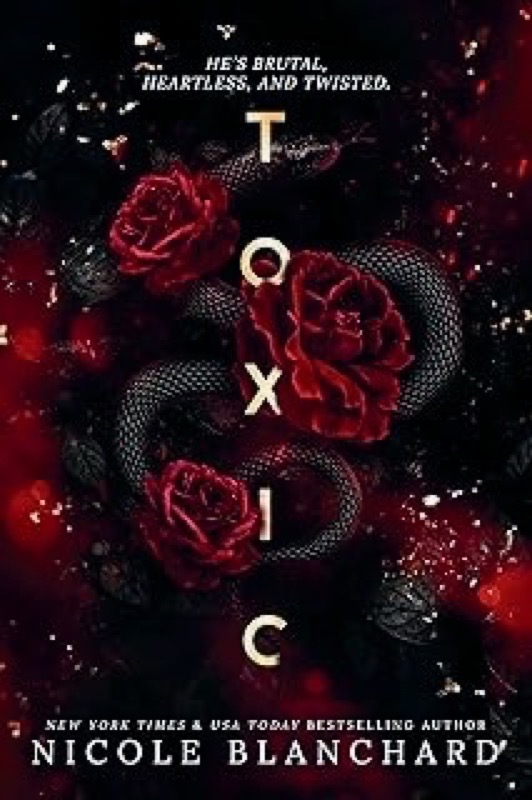
Toxic
He's brutal, heartless, and twisted.
Hook & thesis
In Toxic, Nicole Blanchard crafts a visceral enemies-to-lovers narrative that delves into the intoxicating and often perilous nature of obsession. Verdict: This novel masterfully transforms a treacherous dance of desire into a haunting exploration of human vulnerability and power dynamics.
The contextual pivot
Positioned firmly within the dark romance subgenre, Toxic navigates familiar tropes of forbidden attraction and emotional peril, akin to works by authors like Tarryn Fisher and Anna Zaires. Blanchard’s prose sidesteps the often sanitized portrayals of love, instead illuminating the jagged edges that accompany passion. The invisible audience here comprises readers longing for depth in their romantic escapades, and Blanchard bridges niche tropes with a broader appeal by embedding psychological complexity within her characters. This approach allows the novel to resonate beyond its genre, inviting general readers to grapple with the complexities of toxic relationships.
Deep-dive critique
The structural choices in Toxic create an atmospheric tension that serves the narrative well. Blanchard employs a dual perspective that oscillates between the protagonists, allowing readers intimate access to their conflicting emotions. This choice amplifies the reader’s engagement with the central conflict of desire versus danger, effectively mirroring the tumultuous relationship dynamics at play. However, pacing falters in sections, with some moments dragging where the intensity could be heightened, leaving a few pivotal scenes feeling less impactful than intended.
Blanchard’s prose excels in its vivid imagery and sharp dialogue, capturing the raw, visceral nature of attraction and the underlying dread of the characters’ circumstances. Yet, certain character developments risk becoming one-dimensional, particularly the male lead, whose intensity sometimes veers into caricature. The thematic exploration of obsession is compelling, yet the resolution feels somewhat rushed, as if the narrative seeks to escape the labyrinthine tensions it has built. In doing so, the ending may leave some readers wanting—a tension unresolved amidst the emotional wreckage the characters leave behind.
Discussion launchpad
The polarities in Toxic stem from its unabashed embrace of darkness in romance. Readers may find themselves divided over whether the portrayal of toxic relationships serves as a cautionary tale or romanticizes unhealthy dynamics.
Questions for the room:
- Does the exploration of obsession in Toxic provide a nuanced commentary on love, or does it glorify toxicity?
- How effectively does the dual perspective enhance or detract from the emotional stakes?
- In what ways do the characters reflect or subvert traditional archetypes in dark romance?
- Can the intense portrayal of desire and danger coexist without crossing into harmful territory?
- What lingering questions do you have about the characters’ motivations and the implications of their relationship?
#TheOrchidRoom #Toxic #darkromance #enemiestolovers #literaryanalysis