
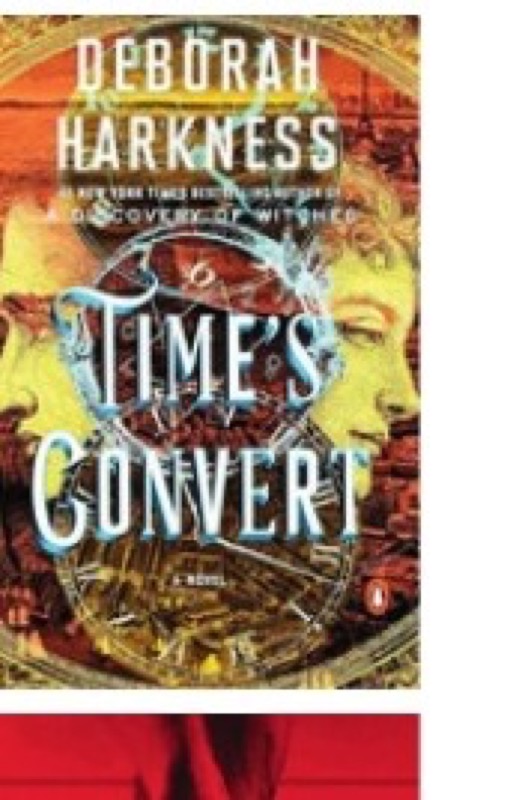
Time's Convert
Hook & thesis
In Time’s Convert, Deborah Harkness delicately weaves a tapestry of love, transformation, and the haunting echoes of history within a vampire paradigm. Verdict: This book pulses with a deep, unsettling exploration of identity that transcends the narrative tropes of its genre, making it a notable entry in the realm of gothic romance.
The contextual pivot
Harkness’s work occupies a distinct niche within the vampire-paranormal genre, blending elements of historical fiction with supernatural intrigue. This novel acts as a bridge between her previous All Souls trilogy and broader literary traditions, drawing in both ardent fans and curious newcomers seeking depth in their paranormal reads. With its rich historical context and exploration of timeless themes—such as the struggle for agency and the desire for connection—Time’s Convert speaks to an invisible audience of readers craving complexity amidst the allure of the supernatural. In this sense, Harkness deftly unites niche tropes with broader appeal, allowing the story to resonate beyond typical genre boundaries.
Deep-dive critique
Structurally, Time’s Convert employs an intricate dual narrative that shifts between past and present, examining the transformation of its characters across time. While this framework serves to enhance the exploration of identity and consequence, it occasionally hinders pacing; some transitions feel abrupt, potentially disorienting readers. Harkness excels in her prose, crafting lush, atmospheric settings that evoke a sense of longing and desire. The dialogue, often layered with historical vernacular, enriches character development and authenticity, although at times it risks alienating those unfamiliar with the historical references.
Furthermore, the thematic interplay between love and power dynamics emerges as a driving force, particularly in the relationships that navigate the complexities of vampire lore and human connection. The exploration of blood—both literally and metaphorically—serves as a potent symbol of intimacy and sacrifice, although certain scenes might provoke discomfort due to their graphic nature. The ending, while satisfying in its resolution of key character arcs, leaves some narrative threads tantalizingly open, inviting contemplation on the cyclical nature of time and transformation. This ambiguity can be interpreted as a flaw or a strength, depending on the reader’s desire for closure.
Discussion launchpad
While Harkness provides a rich tapestry of themes, her narrative choices prompt polarizing discussions around pacing and audience engagement. The dual narrative invites scrutiny—does it deepen the reader’s connection to the characters, or does it dilute the urgency of their arcs?
Questions for the room:
- How do you feel about the dual narrative structure—did it enhance or detract from your reading experience?
- In what ways do the themes of identity and transformation resonate with contemporary issues?
- How does Harkness balance the allure of the supernatural with the gritty realities of her characters’ lives?
- What are your thoughts on the ending—do you see it as a triumph of thematic closure or an evasion of resolution?
- How does the portrayal of blood as a symbol affect your understanding of relationships in the story?
#TheOrchidRoom #vampire #paranormal #darkromance #literaryanalysis #darkheartlabs