
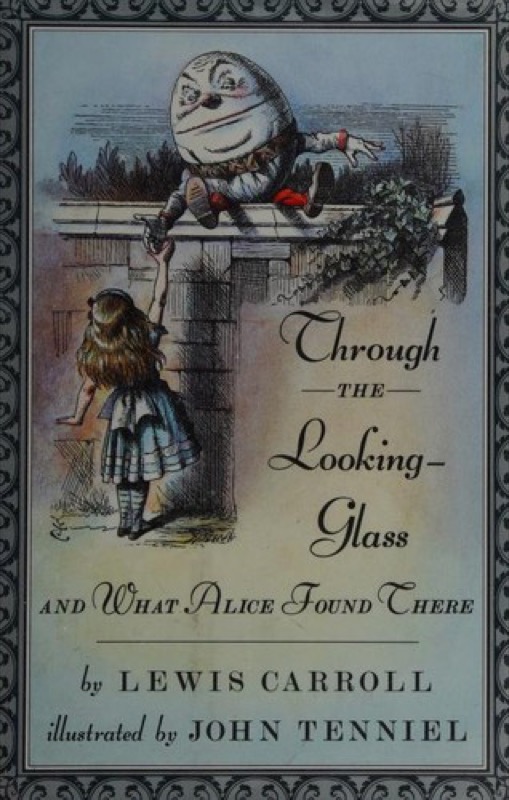
Through the Looking-Glass and What Alice Found There (Alice's Adventures in Wonderland, #2)
Alice's Adventures in Wonderland, #2
Hook & thesis
In Lewis Carroll’s Through the Looking-Glass and What Alice Found There, the narrative serves as a whimsical exploration of identity and the paradoxes of language. Verdict: Through its clever use of linguistic play and surreal encounters, Carroll effectively highlights the fluidity of reality and self, making this sequel not only a charming children’s tale but also a profound commentary on personal growth.
The contextual pivot
As a cornerstone of juvenile fiction, Carroll’s work stands alongside other fantasy classics like J.M. Barrie’s Peter Pan and L. Frank Baum’s The Wonderful Wizard of Oz. While these stories also feature dreamlike adventures, Carroll’s unique blend of nonsense and logic positions him as a pioneer in the genre, appealing to both children and adults. The invisible audience for this work includes those who appreciate the intricacies of language and the absurdities of life, allowing it to bridge niche tropes to a broader readership.
Deep-dive critique
Carroll’s structural approach in Through the Looking-Glass effectively mirrors the themes of identity and transformation. The mirror motif suggests duality, while the non-linear timeline creates an immersive experience that epitomizes the dream-like quality of the narrative. Carroll’s use of dialogue is particularly noteworthy; characters engage in playful banter that reveals their personalities and philosophical underpinnings. For instance, the conversations between Alice and the Red Queen showcase the tension between authority and autonomy, while also reflecting Alice’s evolving self-awareness. However, some readers might find the pacing uneven, as certain episodes feel overly drawn out, which can detract from the overall tension. The ending, while whimsical and open-ended, invites reflection on the nature of dreams versus reality, ultimately leaving readers to ponder Alice’s journey beyond the looking-glass.
Discussion launchpad
Carroll’s narrative invites both appreciation and critique, particularly concerning its balance of playful absurdity with deeper existential queries.
Questions for the room:
- How do the characters in Through the Looking-Glass reflect aspects of Alice’s developing identity?
- In what ways does Carroll’s use of language both enhance and complicate the narrative’s themes?
- What is the significance of the mirror motif in relation to self-perception and reality?
- Do you think the book’s nonsensical elements overshadow its more serious themes?
- How does this sequel compare to the original Alice’s Adventures in Wonderland in terms of thematic depth?
#LitClass #Grade11 #RequiredReading #fantasy #classic #surreal