
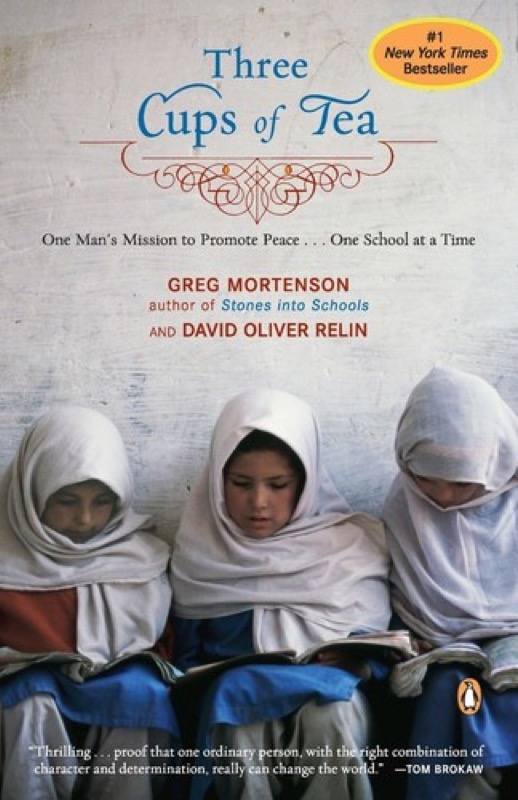
Three Cups of Tea: One Man's Mission to Promote Peace ... One School at a Time
Hook & thesis
In Three Cups of Tea: One Man’s Mission to Promote Peace … One School at a Time, Greg Mortenson sets out on a personal odyssey that intertwines philanthropy with the stark realities of life in the mountainous regions of Pakistan and Afghanistan. Verdict: While the book serves as an inspiring testament to one man’s dedication, it ultimately raises questions about the authenticity of its narrative and the complexities of cultural engagement.
The contextual pivot
This memoir occupies a unique space within the nonfiction genre, particularly in the realm of social activism and education. Mortenson’s work can be juxtaposed with other philanthropic narratives, such as The Blind Side by Michael Lewis or A Long Way Gone by Ishmael Beah, both of which blend personal anecdotes with larger societal themes. Unlike purely anecdotal memoirs, Mortenson’s account seeks to bridge the niche of foreign aid and cultural understanding to a general audience, making his mission relatable and accessible. His storytelling is directed towards readers who may not typically engage with topics of international education or development, effectively widening the discourse around philanthropy.
Deep-dive critique
Structurally, Three Cups of Tea employs a nonlinear narrative that oscillates between Mortenson’s formative experiences and the ongoing efforts in building schools. This pacing, while initially engaging, sometimes undermines the emotional resonance of key events. The juxtaposition of personal anecdotes with broader political and cultural contexts creates a dissonance that occasionally feels jarring. For instance, Mortenson’s encounters with local tribes are rich in detail but lack the depth necessary to fully convey the complexities of their lives and beliefs.
The prose, while earnest and straightforward, occasionally falters into overly sentimental territory, detracting from the weight of Mortenson’s mission. Character development is similarly uneven; while Mortenson himself is fleshed out, the individuals he encounters remain somewhat archetypal. Dialogue, although authentic, often serves as a means to convey Mortenson’s ideals rather than to develop interpersonal dynamics.
As the narrative reaches its conclusion, the question of whether the ending is earned looms large. The resolution feels somewhat rushed, leaving the reader questioning the broader implications of Mortenson’s work. The noble sentiment of promoting peace through education is commendable, yet the execution invites scrutiny.
Discussion launchpad
Three Cups of Tea invites readers to grapple with the complexities of cultural engagement in philanthropy. It raises polarizing questions about the ethics of representation and authenticity in humanitarian narratives.
Questions for the room:
- How does Mortenson’s narrative shape our understanding of Western involvement in education in developing countries?
- To what extent does the book’s perceived authenticity affect its impact?
- Can philanthropic efforts, as depicted in the book, truly promote peace, or do they risk oversimplifying complex issues?
- How do personal anecdotes in social activism narratives impact the reader’s perception of those cultures?
- What role does the portrayal of local communities play in the effectiveness of charitable narratives?
#LiteraryAnalysis #darkthriller #nonfiction #memoir #philanthropy #education #theorchidroom