
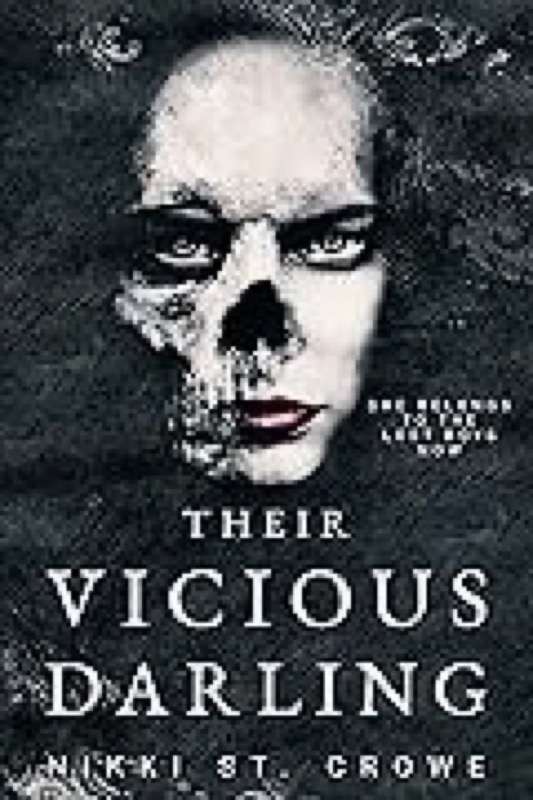
Their Vicious Darling
She belongs to the Lost Boys now.
Hook & thesis
In Their Vicious Darling, Nikki St. Crowe crafts a seductive and treacherous narrative that explores the tangled dynamics of obsession and belonging within a vampire-infused gothic landscape. Verdict: This tale is a thrilling descent into the heart of darkness, where desire intertwines with danger, leaving readers teetering on the edge of their own moral compasses.
The contextual pivot
As a vibrant entry in the vampire-paranormal genre, St. Crowe’s work draws on familiar tropes while also challenging the conventions of dark romance. Unlike typical vampire narratives that often romanticize immortality, this novel digs deeper into the psychological repercussions of obsession and the implications of belonging to a predatory community. Comparatively, it occupies a space alongside the works of authors like Anne Rice and Sarah J. Maas, merging gothic elements with contemporary themes of identity and choice, appealing to both niche aficionados and a broader audience. The intricate dynamics of the “why-choose” trope, paired with a reverse harem structure, invites readers to ponder the allure of power and submission in relationships, making the narrative widely relatable despite its darker undercurrents.
Deep-dive critique
St. Crowe’s narrative structure employs a non-linear timeline that mirrors the chaotic psyche of its protagonist, enhancing the themes of obsession and identity crisis. The pacing fluctuates, propelling readers through moments of dizzying tension and reflective introspection, which serves to emphasize the emotional stakes. The third-person limited point of view expertly immerses us in the protagonist’s turmoil, thus elevating the stakes of her choices and desires, while the prose is both lush and haunting, tapping into the gothic aesthetic that permeates the book.
Character development is particularly noteworthy; each member of the “Lost Boys” is rendered with intricate backstories that position them as both alluring and menacing, creating a palpable tension that fuels the narrative. However, at times, the dialogue can falter, slipping into clichés that momentarily undermine the otherwise sophisticated characterizations.
The ending, while audacious and layered, raises questions about the protagonist’s growth—or lack thereof. It sits uncomfortably, challenging readers to confront their own expectations of redemption and agency within relationships marked by manipulation and desire. This deliberate ambiguity invites rich interpretation, making the conclusion simultaneously provocative and contentious.
Discussion launchpad
The juxtaposition of desire and danger in Their Vicious Darling offers fertile ground for debate, particularly regarding the portrayal of obsession and its consequences in romantic relationships.
Questions for the room:
- How does St. Crowe’s portrayal of obsession challenge or reinforce traditional views of romance?
- In what ways does the reverse harem dynamic complicate the themes of autonomy and choice?
- Does the non-linear structure enhance your understanding of the protagonist’s psyche, or does it create confusion?
- What does the ending suggest about the nature of love and loyalty in toxic relationships?
- How effective is the gothic atmosphere in shaping the emotional landscape of the characters?
#TheOrchidRoom #TheirViciousDarling #vampire #darkromance #literaryanalysis