
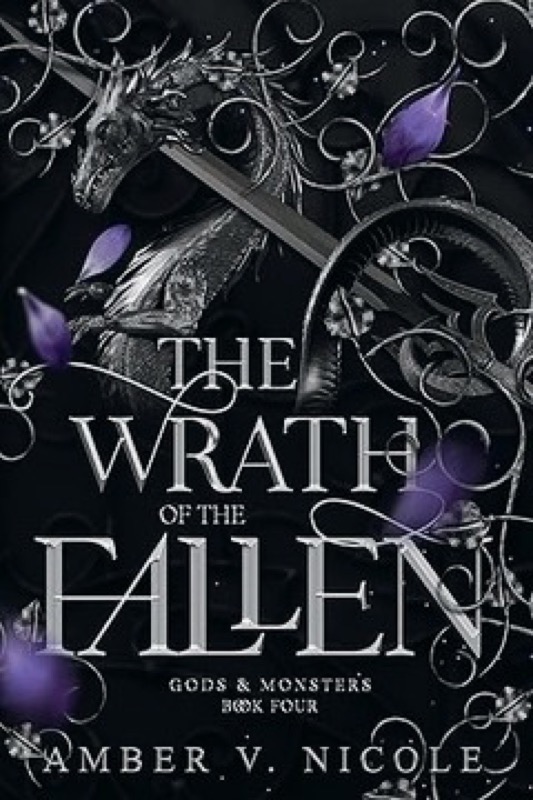
The Wrath of the Fallen
Gods & Monsters Book Four
Hook & thesis
In Amber V. Nicole’s The Wrath of the Fallen, the fabric of dark romance intertwines with the threads of obsession and the supernatural, revealing the depths of human desire and the chaos of vengeance. Verdict: This novel masterfully navigates the gothic landscape, crafting a narrative that seduces its readers while challenging their moral compass.
The contextual pivot
As the fourth entry in the Gods & Monsters series, The Wrath of the Fallen stands at the intersection of vampire mythology and paranormal romance, drawing upon well-established tropes while simultaneously redefining them. Nicole’s work occupies a niche where fervent fans of dark romance converge with those curious about the complexities of power dynamics and emotional turmoil that accompany immortality and obsession. In a genre that often flattens character motivations to mere archetypes, Nicole’s characters pulse with raw, unapologetic humanity and moral ambiguity, bridging the gap between genre enthusiasts and general readers who crave deeper thematic explorations.
Deep-dive critique
From the outset, The Wrath of the Fallen employs a non-linear narrative structure that enhances the tension between past traumas and present desires. The dual timeline cleverly mirrors the protagonists’ internal conflicts, drawing readers into a labyrinth of emotions that oscillate between love and destruction. Nicole’s prose is lush, invoking a world that feels both seductive and perilous, reinforcing the gothic elements that underpin the story. For instance, the visceral descriptions of the characters’ encounters with dark magic not only serve to heighten the stakes but also deepen the reader’s understanding of their motivations.
Characterization is another area where the novel excels; the protagonists are not merely vessels for the plot but rather complex individuals grappling with their own demons. The dialogue crackles with tension, revealing layers of obsession and longing that propel the narrative forward. However, the pacing occasionally falters as certain sections linger too long on exposition rather than progressing the central conflict. This can create a dissonance, particularly in moments where urgency is critical, such as in the climactic confrontations with the antagonists.
The thematic exploration of obsession, as a double-edged sword, raises questions about the nature of love and the sacrifices one makes in its name. Yet, while the ending provides resolution, it risks feeling rushed, leaving some character arcs feeling inadequately explored. This thematic richness ultimately elevates the novel, but the execution could have benefited from a more deliberate pacing to allow these ideas to resonate fully.
Discussion launchpad
The Wrath of the Fallen invites a multitude of interpretations and debates, particularly around its portrayal of obsession and morality. Does the novel romanticize toxic relationships, or does it serve as a cautionary tale? Furthermore, the blending of dark magic with romance raises intriguing questions about power dynamics and agency.
Questions for the room:
- How do you interpret the balance between romance and obsession in the narrative?
- In what ways does the non-linear structure enhance or hinder your engagement with the characters?
- Does the ending feel earned, or does it leave unresolved tensions that undercut the story’s themes?
- How effectively does Nicole use gothic elements to enhance the emotional stakes of the narrative?
- What can we learn from the characters’ struggles with their desires and moral choices?
#TheOrchidRoom #vampire #darkromance #godsandmonsters #literaryanalysis