
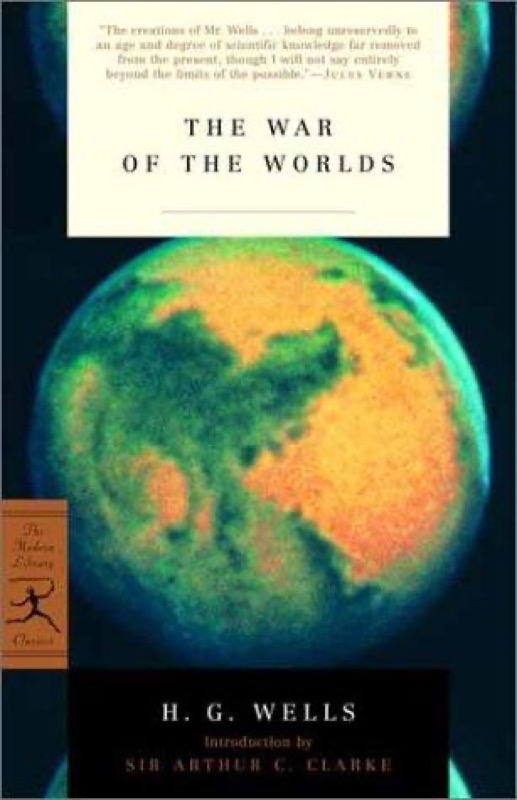
The War of the Worlds
Hook & thesis
In H.G. Wells’ The War of the Worlds, the true engine is not the alien invasion itself, but the raw exploration of humanity’s primal instincts when faced with existential annihilation. Verdict: This classic serves as a chilling reminder that the greatest horrors often lie within the human psyche, revealing a disturbing intersection of fear and moral decay amidst interstellar conflict.
The contextual pivot
Positioned firmly within the dark-thriller genre, Wells’ work is a pioneering piece of science fiction that intricately weaves together elements of horror and social commentary. Released in the late 19th century, it stands alongside contemporaneous works like Mary Shelley’s Frankenstein and Bram Stoker’s Dracula, which similarly interrogate humanity’s darker inclinations through the lens of the fantastic. The invisible audience for The War of the Worlds is both the science fiction aficionado and the literary scholar, as it bridges niche tropes of alien invasion with broader existential questions that resonate even with general readers today.
Deep-dive critique
Wells employs a first-person narrative that oscillates between personal reflection and omniscient observation, effectively capturing the chaos and terror wrought by the Martian invaders. This structure enhances the sense of immediacy and dread, immersing the reader in a world disintegrating under the weight of primal fear. The pacing, particularly in the early chapters, is deliberately slow, allowing tension to build gradually. However, this also leads to occasional lulls that might frustrate readers seeking constant action.
The prose is characterized by stark, almost clinical descriptions of violence and destruction, heightening the horror of the events without indulging in gratuitous detail. For instance, the depiction of the Martians’ death rays and the subsequent annihilation of civilization serves not only as a spectacle but as a harrowing reflection on humanity’s vulnerability. The thematic exploration of colonialism and the fear of the ‘other’ permeates the narrative, revealing the author’s critique of imperialist attitudes prevalent in his time. However, the ending, while resonant, can feel abrupt, as if Wells himself recoils from the consequences of his own narrative.
Discussion launchpad
The book’s polarizing elements lie in its blending of speculative fiction and sociopolitical critique, which may alienate readers expecting a straightforward thriller. Some may find the philosophical undertones a distraction from the action, while others may appreciate this depth as a hallmark of great literature.
Questions for the room:
- How does Wells’ portrayal of the Martians reflect contemporary fears of imperialism and the unknown?
- In what ways does the story challenge or reinforce traditional gender roles through its characterizations?
- Does the narrative’s bleak outlook on humanity resonate more with modern readers than it did at its time of publication?
- How effectively does the first-person perspective enhance or detract from the horror experienced by the characters?
- What does the resolution—or lack thereof—say about the nature of human resilience in the face of catastrophe?
#LiteraryAnalysis #GothicEdge
#darkthriller #romanticsuspense #alieninvasion