
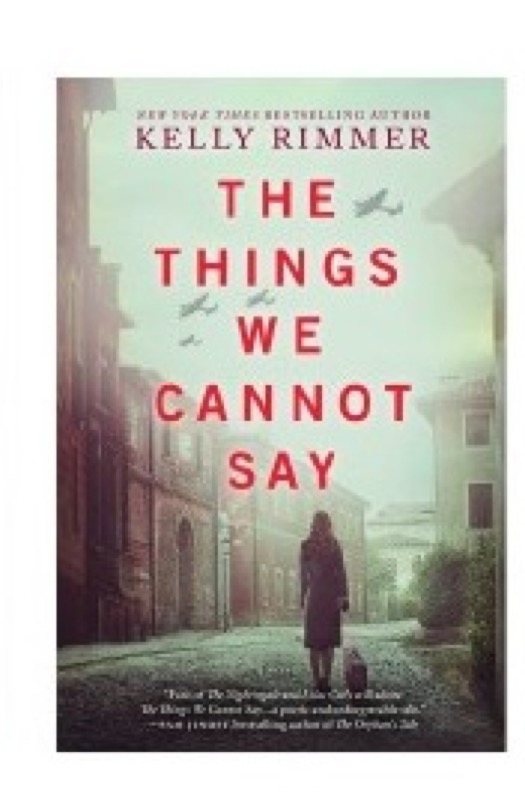
The Things We Cannot Say
Hook & thesis
In The Things We Cannot Say, Kelly Rimmer intricately weaves a tale that juxtaposes the horrors of war against the complexities of family secrets and unspoken truths. Verdict: This novel is a haunting exploration of how silence can shape lives, leaving shadows that echo across generations.
The contextual pivot
Set against the backdrop of World War II, Rimmer’s narrative straddles the dark-thriller and romantic suspense genres, positioning it alongside authors like Kristin Hannah and Kate Morton, who similarly explore familial trauma amidst historical upheaval. The dual timeline structure—shifting between the war-torn past and a modern-day reckoning—serves not only to bridge niche tropes but also to resonate with a broader audience seeking an emotional and psychological depth in their reading. Rimmer’s work here offers a fresh lens on the gothic notion of inherited legacies and the burdens they bear.
Deep-dive critique
Rimmer’s craft displays a deft understanding of pacing and character development, especially in her use of dual timelines. The alternating perspectives create mounting tension, as readers are drawn into the protagonist’s contemporary struggle while uncovering the harrowing experiences of her ancestors. However, at times, the transitions can feel jarring, causing a disruption in the emotional flow. The prose is descriptive and imbued with a melancholic beauty, highlighting the weight of unspoken words and the trauma of war—though it occasionally teeters into melodrama, risking the authenticity of its emotional stakes.
Characterization shines as Rimmer delves into the psychological impacts of silence within families. The protagonist’s internal conflicts are mirrored by the historical characters, each grappling with their own demons, yet the supporting cast occasionally lacks depth, serving more as narrative devices than fully realized individuals. Dialogue effectively conveys the tension and pain of familial relationships, but some exchanges feel overly expository, neglecting the subtleties of real conversation.
The thematic exploration of secrets and their corrosive effects is compelling, though the resolution at times feels rushed; the ending, while poignant, raises questions about whether the emotional arcs have been fully earned. The intertwining of personal and historical narratives ultimately reflects on how the scars of the past can linger, making the story resonate long after the final page is turned.
Discussion launchpad
Rimmer’s novel invites a deeper examination of the interplay between personal trauma and historical legacy, yet it also raises questions about the effectiveness of its execution. How does the balance of family drama against historical context shape our understanding of both?
Questions for the room:
- Does the dual timeline structure enhance or detract from the emotional impact of the story?
- How does Rimmer’s portrayal of silence and family secrets compare to other works in the genre?
- Are the characters’ resolutions believable given their backgrounds and experiences?
- In what ways does the historical setting amplify the novel’s themes of trauma and legacy?
#LiteraryAnalysis #GothicEdge
#darkthriller #romanticsuspense #wwii #dual timeline #family