
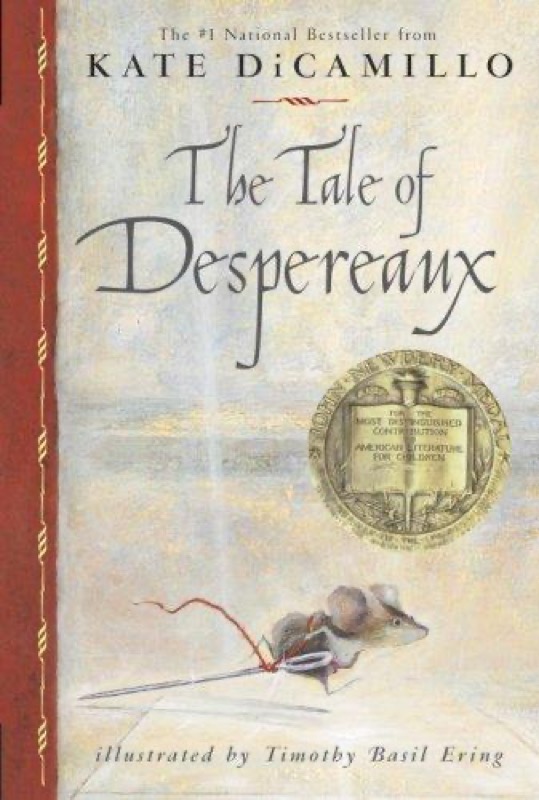
The Tale of Despereaux
Hook & thesis
In Kate DiCamillo’s The Tale of Despereaux, the author deftly intertwines themes of light and darkness to explore the redemptive power of courage and love amidst a world steeped in shadows. Verdict: This tale transcends its fairy-tale exterior to reveal a gothic heart that pulses with the raw struggle for connection beneath layers of fear and isolation.
The contextual pivot
Firmly situated within the realm of gothic horror romance, DiCamillo’s narrative borrows motifs from classic fairy tales while challenging traditional tropes with its darker undertones. Unlike typical children’s literature, which often leans towards simplistic moral binaries, this story presents a complex emotional landscape that resonates with both young and adult readers. DiCamillo’s work, often characterized by its whimsical yet poignant storytelling, invites a diverse audience to engage with unsettling themes—bridging the gap between niche fairy tale elements and broader literary sensibilities.
Deep-dive critique
The structure of The Tale of Despereaux is marked by a narrative style that oscillates between third-person omniscience and intimate character perspectives, effectively immersing readers in the psychological depths of its protagonists. This choice not only enhances the tension but also reflects the duality of light and darkness central to the story. For instance, the contrasting backstories of Despereaux, the noble mouse, and Roscuro, the rat, are not just plot devices but thematic mirrors that explore courage and treachery, respectively.
DiCamillo’s prose is imbued with lyrical quality, yet it maintains a precision that evokes visceral imagery—particularly when depicting the castle’s oppressive atmosphere and the vibrant flickers of hope embodied by Despereaux. The dialogue, rich with subtext, captures the intricacies of interpersonal relationships and the haunting echoes of betrayal, thereby enriching character development. However, while the thematic execution is commendable, the pacing occasionally falters; some passages linger too long on introspection, risking reader engagement.
The ending, while satisfying in its resolution, raises questions about forgiveness and redemption—does the resolution serve all characters equally, or does it favor some narratives over others? In this way, the conclusion invites debate about the morality of its characters and the fates they meet.
Discussion launchpad
The interplay between light and dark in DiCamillo’s narrative invites rich discussion, particularly regarding the moral implications of redemption and sacrifice.
- What does the juxtaposition of Despereaux and Roscuro reveal about the nature of courage?
- Is the fairy-tale format effective in addressing darker themes, or does it dilute the weight of these issues?
- How do the character arcs align with or subvert traditional fairy-tale endings?
Questions for the room:
- In what ways does the novel’s structure enhance or detract from its themes?
- Are the darker themes suitable for a younger audience, or do they require a more mature interpretation?
- How does DiCamillo’s portrayal of courage challenge conventional definitions?
#TheOrchidRoom #gothic #horrorromance #fairytale #literaryanalysis