
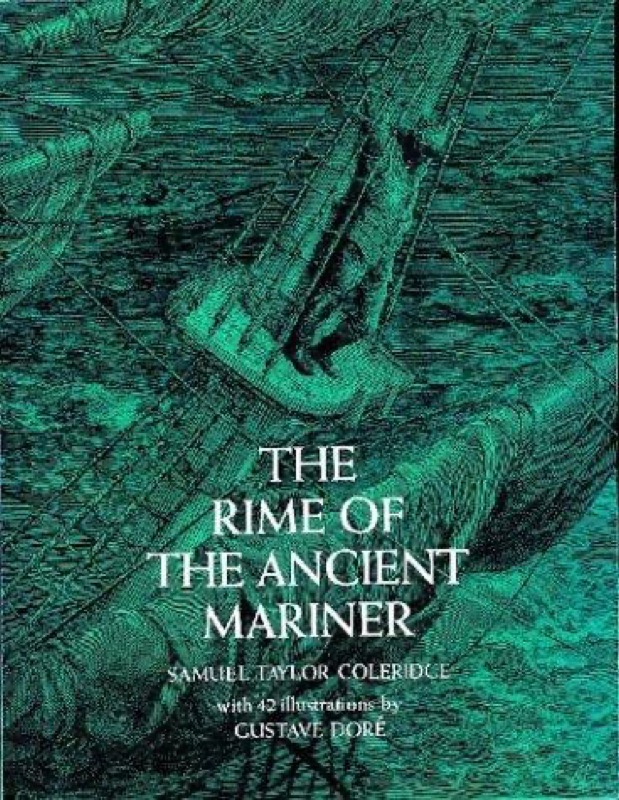
The Rime of the Ancient Mariner
Hook & thesis
Coleridge’s The Rime of the Ancient Mariner is a haunting exploration of sin, redemption, and the profound interconnectedness of all living things. Verdict: This poem is a masterclass in gothic horror, where the undercurrents of desire and despair resonate far beyond the supernatural.
The contextual pivot
In the realm of gothic horror and romance, Coleridge’s work stands as a seminal piece that bridges the early Romantic movement with elements of the sublime and the grotesque. Its narrative, steeped in superstition and nature’s terrifying beauty, reflects the era’s fascination with the unknown. While other poets like Byron and Shelley often celebrated nature’s grandeur, Coleridge delves into its darker, more ominous facets, targeting a niche audience that grapples with existential dread. Yet, his lyrical prowess invites general readers to ponder deeper themes, making the text accessible despite its gothic trappings.
Deep-dive critique
The structure of The Rime of the Ancient Mariner is crucial to its thematic success. Divided into seven parts, the poem’s pacing mirrors the mariner’s slow descent into madness, effectively building tension and a sense of foreboding. Coleridge employs a first-person narrative that not only immerses the reader in the mariner’s psychological turmoil but also fosters a sense of immediacy, rendering the supernatural elements more potent. The use of vivid imagery—such as the eerie silent ship and the haunting albatross—evokes visceral reactions that resonate with the dread of isolation and guilt.
Thematically, the poem grapples with the consequences of transgression and the path to redemption. The mariner’s initial act of violence against the albatross serves as a catalyst for his profound suffering, illustrating a deep moral conflict intertwined with nature. Coleridge’s use of supernatural themes, particularly in the form of spectral beings and the curse of the ocean, amplifies this conflict, suggesting that the mariner’s fate is an inextricable part of a larger cosmic order. However, the poem is not without its mechanical flaws; certain passages may feel overly ornate, potentially alienating modern readers who might seek a more straightforward narrative.
Ultimately, the poem’s conclusion—where the mariner’s newfound appreciation for all living things leads to his spiritual salvation—feels both earned and profoundly unsettling, challenging readers to consider their own relationship with nature and the moral implications of their actions.
Discussion launchpad
Coleridge’s poem elicits strong reactions, particularly in its exploration of guilt and redemption, as well as the nature of humanity’s relationship with the natural world. This can lead to polarized perspectives on the text’s moral message and its contemporary relevance.
Questions for the room:
- Does the mariner’s journey symbolize a broader commentary on humanity’s exploitation of nature?
- How does the poem’s structure influence your understanding of its themes?
- In what ways do the supernatural elements enhance or detract from the poem’s message?
- Can we draw parallels between the mariner’s plight and modern environmental issues?
- What does the albatross symbolize in the context of guilt and responsibility?
#TheOrchidRoom #gothic #horrorromance #classic #literaryanalysis