
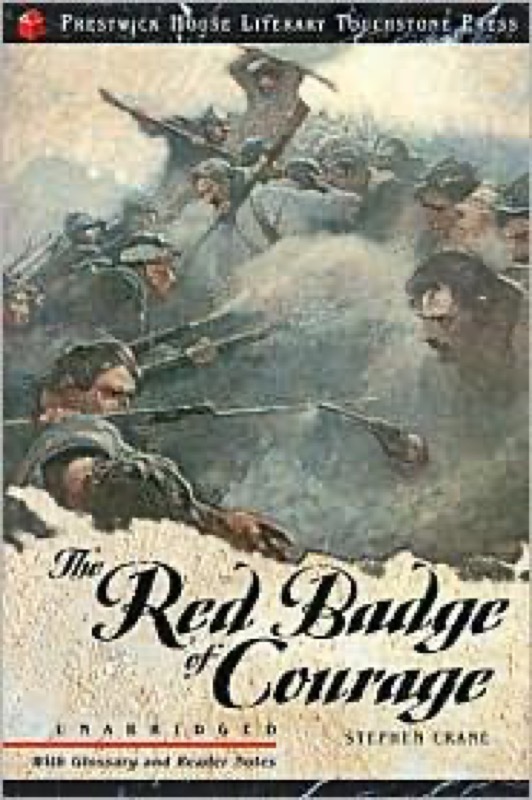
The Red Badge of Courage
Hook & thesis
Stephen Crane’s The Red Badge of Courage weaves a gripping exploration of the psychological turmoil faced by a young soldier during the Civil War. At its heart, the novel examines the profound conflict between courage and cowardice in the face of death. Verdict: This is a poignant meditation on the nature of bravery and the human spirit, rendered with striking immediacy and emotional depth.
The contextual pivot
As a cornerstone of American literature, this novel finds its place within the realist and naturalist traditions, sitting alongside the likes of Ambrose Bierce and Theodore Dreiser. Crane’s focus on the inner experiences of his protagonist, Henry Fleming, bridges niche themes of war with broader existential questions, allowing the book to resonate beyond its historical context. The invisible audience here consists of readers seeking deeper psychological truths in narratives of conflict, a bridge between the specificity of Civil War experiences and universal themes of fear and courage.
Deep-dive critique
The novel’s structure is notably episodic, a choice that both enriches and complicates the narrative flow. Crane employs a stream-of-consciousness style, immersing readers in Henry’s fluctuating psyche, which serves to amplify the chaotic essence of war. The use of vivid, impressionistic imagery showcases Crane’s poetic prowess, painting the brutal realities of combat with a stark clarity that evokes visceral reactions. For instance, descriptions of the battlefield often blur the line between reality and Henry’s tumultuous imagination, enhancing the thematic tension of perception versus reality.
However, this ambitious design can lead to moments of disorientation. Pacing sometimes falters as the narrative oscillates between intense action and reflective introspection, which may alienate readers seeking a more traditional structure. While the dialogue is sparse, it is often loaded with significance, channeling the characters’ internal struggles and societal expectations. Ultimately, the ending, marked by Henry’s acceptance of his own humanity and imperfections, feels earned and poignant, aligning with the novel’s overarching theme of personal growth amidst chaos.
Discussion launchpad
The novel invites robust discourse around the nature of courage and the psychological burdens of war. Readers may grapple with different interpretations of Henry’s journey, questioning whether his eventual acceptance of fear constitutes true bravery.
Questions for the room:
- Is the portrayal of fear as a natural response a sign of weakness or a profound understanding of human nature?
- How does Crane’s impressionistic style impact our connection to Henry as a character?
- In what ways does the setting of the Civil War enhance or detract from the psychological themes presented?
- How does The Red Badge of Courage compare to modern narratives of war and courage?
- What aspects of the novel feel most relevant to contemporary issues of mental health and trauma?
#LiteraryAnalysis #darkthriller #civilwar #courage #fear