
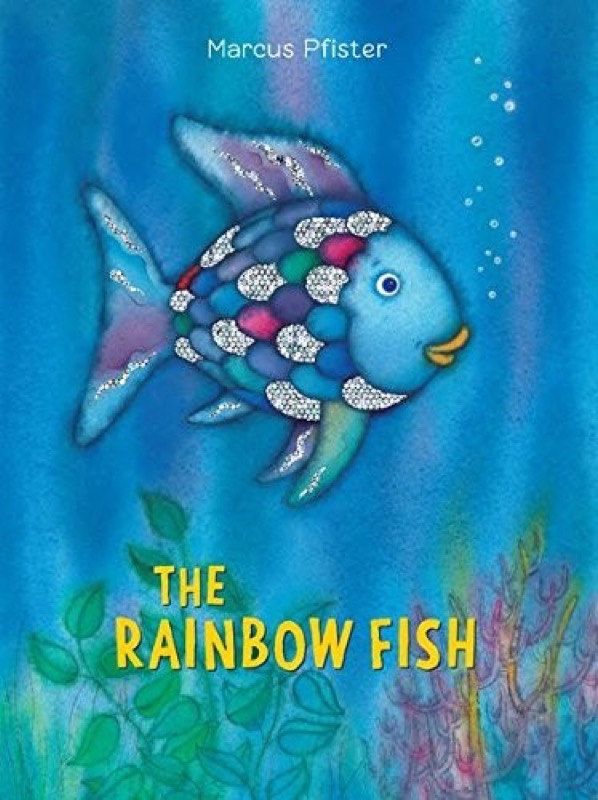
The Rainbow Fish
Hook & thesis
In The Rainbow Fish, Marcus Pfister explores the haunting tension between individuality and communal belonging through the prism of a shimmering fish’s quest for acceptance. Verdict: This tale, while ostensibly for children, unveils a deeper commentary on the cost of beauty and the fragility of friendship.
The contextual pivot
Nestled within children’s literature, Pfister’s work sits at a peculiar intersection of gothic and romantic tropes, often overlooked in the genre landscape. Unlike traditional dark tales, where isolation breeds despair, Pfister’s narrative fuses aesthetic allure with underlying themes of alienation and self-worth. The contrast of the vibrant, beautiful fish against the muted ocean depths reflects a society grappling with envy — a motif resonant across classic gothic works. Pfister’s style, rich in illustration, beckons to both young readers and adults, inviting a dual interpretation that enhances its reach beyond niche audiences.
Deep-dive critique
Pfister’s structural choices — a simple narrative paired with evocative illustrations — serve to amplify the book’s thematic weight. The pacing is deliberate, allowing moments of tension to resonate, particularly in the fish’s interactions with the other sea creatures. This tension builds as the fish’s beauty becomes both a blessing and a curse, mirroring the complexities of self-acceptance and the yearning for connection. The dialogue is sparse, yet poignant, emphasizing the emotional landscape without overwhelming young readers; for instance, the fish’s solitary existence starkly contrasts with the vibrant community around it, embodying the internal conflict of wanting to belong while fearing the loss of one’s uniqueness.
However, the ending, where the fish learns to share its scales, may feel somewhat rushed. While it aims to convey a moral lesson about generosity and friendship, it skirts the deeper implications of sacrifice and identity. The initial allure of the scales as symbols of worth fades too quickly, raising questions about the permanence of self-worth in the face of social conformity. Yet, Pfister’s illustrations remain a triumph, weaving a visual narrative that enhances emotional engagement, with haunting imagery that leaves a lingering sense of melancholy and hope.
Discussion launchpad
Pfister’s approach invites a rich discussion about the dichotomy between beauty and belonging, especially in a world increasingly defined by superficial measures of worth. The gentle yet unsettling undertones of the story can provoke differing interpretations regarding its message on self-acceptance and the social costs of uniqueness.
Questions for the room:
- How does Pfister’s illustration style influence your understanding of the text?
- Do you think the resolution adequately addresses the complexities of the fish’s journey?
- In what ways does the narrative reflect contemporary issues of social media and identity?
- Can we view the fish’s sacrifice as a necessary step toward true friendship, or does it signify a loss of self?
- How does the minimal dialogue affect your emotional connection to the characters?
#TheOrchidRoom #gothic #horrorromance #childrensliterature #selfacceptance