
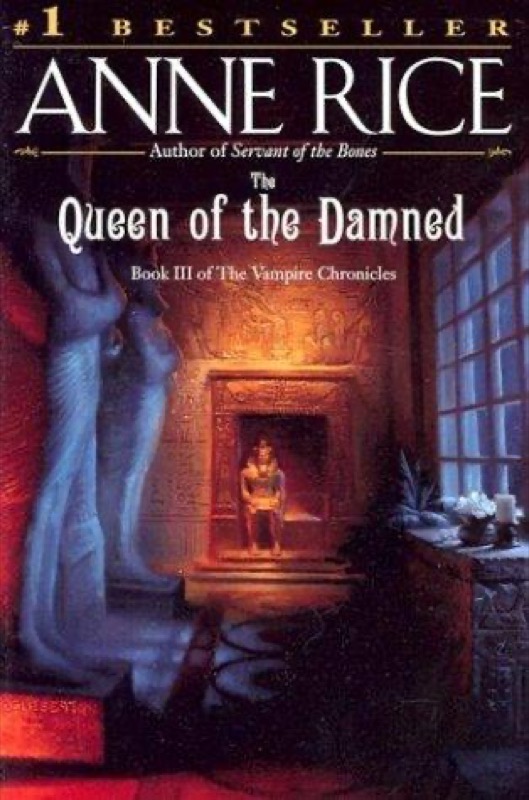
The Queen of the Damned (The Vampire Chronicles, #3)
The Vampire Chronicles, #3
Hook & thesis
Anne Rice’s The Queen of the Damned serves as a visceral exploration of power and immortality, where the thirst for dominance drives both the narrative and its characters. Verdict: This is a gothic symphony of longing and despair that unearths the blood-soaked roots of desire and identity.
The contextual pivot
As the third installment in The Vampire Chronicles, this novel exists within a rich tapestry of vampire lore, expanding the world Rice meticulously crafted in earlier works. The book navigates the terrain of gothic romance and horror, yet it daringly stretches its wings into mythic territory, offering a complex examination of the vampire as both predator and philosopher. Rice’s audience oscillates between devoted fans of the genre and those drawn to the philosophical undertones of mortality. In doing so, she bridges niche tropes that appeal to both avid readers of supernatural fiction and those curious about existential dilemmas, solidifying her status as a luminary in paranormal literature.
Deep-dive critique
Rice’s mastery of lyrical prose elevates the narrative; her sentences often shimmer with a haunting beauty that mirrors the complexities of her characters. The novel’s structure, which interweaves the past and present, effectively builds tension, revealing the lineage of the vampire mythos while simultaneously delving into the psyche of its protagonists. The use of multiple perspectives unveils the internal conflicts of each character, particularly Akasha, who embodies a terrifying blend of seduction and ruthlessness. However, this ambitious narrative can sometimes falter under its weight, with pacing issues in the middle sections that may leave readers feeling adrift amidst the elaborate storytelling.
The themes of desire and power permeate every page, yet their execution can be polarizing; while some may appreciate the philosophical musings on immortality and the human condition, others may find these reflections detract from the urgency of the plot. Character development is both a strength and a weakness—while figures like Lestat and Louis are richly drawn, Akasha risks becoming a mere archetype, a representation of tyranny rather than a fully fleshed-out antagonist. The ending, though grand in its ambition, raises questions about agency and consequence, leaving some threads tantalizingly unresolved.
Discussion launchpad
Rice’s The Queen of the Damned provokes heated discourse on the nature of evil, consent, and the existential weight of immortality. What makes a character sympathetic, even when their actions are reprehensible?
Questions for the room:
- How do you interpret Akasha’s motivations, and do they render her a tragic figure or a villain?
- In what ways does Rice challenge traditional gender roles through her portrayal of female vampires?
- Does the narrative’s philosophical underpinning enhance or detract from the plot’s urgency?
- How does Rice’s lyrical prose serve to heighten the themes of desire and power?
- What unresolved questions linger for you after reading the novel?
#TheOrchidRoom #vampire #darkromance #gothic #literaryanalysis