
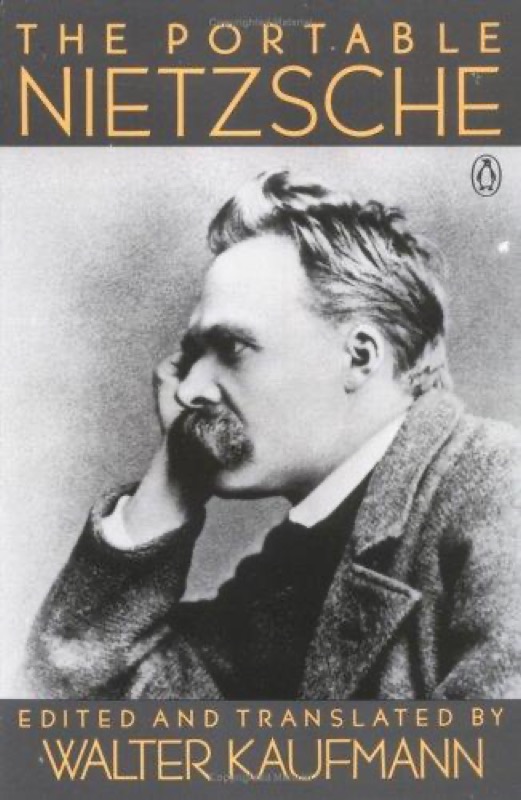
The Portable Nietzsche
Hook & thesis
Friedrich Nietzsche’s The Portable Nietzsche serves as a dark and turbulent exploration of existential despair, challenging readers to confront the chaotic underpinnings of human experience. Verdict: This work is a haunting reminder that the quest for meaning often unravels into a web of nihilism, leaving the reader in a state of unsettling contemplation.
The contextual pivot
Positioned at the edge of philosophical literature, this collection encapsulates Nietzsche’s most potent thoughts, making it a cornerstone for those navigating the dark corridors of existentialism. Unlike conventional narratives, this anthology does not cater to the mainstream; it speaks directly to the disillusioned, the intellectual wanderers, and those who grapple with the weight of being. Comparatively, it stands alongside the works of Kierkegaard and Camus, yet its unique blend of aphoristic brilliance and psychological depth sets it apart, creating a bridge between niche philosophical discourse and broader literary appreciation.
Deep-dive critique
The structure of The Portable Nietzsche eschews a linear progression, instead presenting fragmented insights that reflect the chaotic nature of existence itself. This nonlinear approach serves to enhance the thematic exploration of despair and power dynamics, compelling readers to engage with Nietzsche’s complex ideas through a lens of personal introspection. The prose is sharp and incisive, often veering into poetic territory that heightens the emotional stakes of his arguments. For instance, his famous declaration that “God is dead” is not merely a rhetorical flourish but an invitation to confront the void left in the wake of traditional moral structures.
Characterization is absent in the conventional sense; instead, Nietzsche’s philosophical musings act as characters themselves—each idea personifying the struggle between chaos and order. However, this absence can be a double-edged sword; some readers may find the lack of narrative cohesion challenging, while others will revel in the freedom it offers for personal interpretation. The ending, or rather the absence of a definitive conclusion, is both unsettling and fitting, as it mirrors the perpetual quest for understanding that defines the human condition.
Discussion launchpad
The polarities within The Portable Nietzsche may ignite intense debate among readers, particularly concerning the implications of nihilism and the rejection of universal morality. While some may find Nietzsche’s work liberating, others might perceive it as dangerously subversive.
Questions for the room:
- Is Nietzsche’s idea of the “Übermensch” a hopeful vision or a dangerous ideal?
- How does the absence of concrete narrative impact your engagement with Nietzsche’s philosophies?
- Can the concept of nihilism ultimately lead to empowerment, or does it inevitably result in despair?
- In what ways does Nietzsche’s writing style enhance or detract from the philosophical ideas presented?
- Is The Portable Nietzsche a work that challenges or affirms your own beliefs about morality and existence?
#LiteraryAnalysis #GothicEdge
#darkthriller #existentialism #darkthemes #TheOrchidRoom