
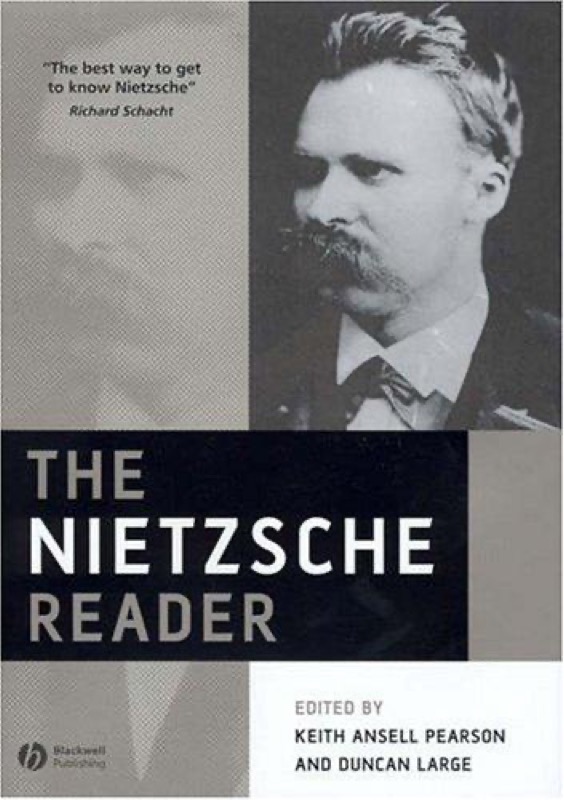
The Nietzsche Reader
Hook & thesis
In The Nietzsche Reader, Friedrich Nietzsche compiles a labyrinthine exploration of the human condition, where existential dread and moral ambiguity reign supreme. Verdict: This collection is a dark tapestry of thought that challenges readers to confront the abyss within themselves, stirring a primordial conflict that transcends mere philosophical discourse.
The contextual pivot
Nestled within the broader landscape of existential philosophy, The Nietzsche Reader stands as a cornerstone of dark intellectualism, a vital precursor to both modern existentialism and nihilism. Unlike conventional dark thrillers that typically rely on plot-driven suspense, Nietzsche’s work invites readers to grapple with the unsettling nature of existence itself. The book is aimed at an audience already teetering on the brink of philosophical inquiry, yet it possesses the capacity to bridge niche philosophical tropes to a more general readership by invoking the age-old battle between good and evil, meaning and meaninglessness.
Deep-dive critique
Nietzsche’s craft shines through in his dexterous melding of poetic prose and piercing aphorisms, creating a rhythmic cadence that pulls readers into the depths of his psyche. The structure of the collection is non-linear, mirroring the fragmented nature of human consciousness and thought. This deliberate pacing serves to enhance the thesis of existential inquiry, while also challenging readers to engage actively with the material rather than passively consume it.
However, the very brilliance of this structure can falter, leaving some passages feeling more like labyrinthine detours than direct pathways to enlightenment. For instance, his concept of the Übermensch, while revolutionary, can lead to misinterpretation without contextual grounding, potentially alienating readers unacquainted with his philosophical lineage. Characterization, if one could call it that in a philosophical anthology, is largely absent, yet Nietzsche’s voice is undeniably a character in itself—provocative and unyielding, echoing the tormented soul of a man grappling with the chaos of existence. The book culminates in a series of reflections that, rather than providing closure, leave readers suspended in a state of existential discomfort—a fitting end for such dark contemplation.
Discussion launchpad
Nietzsche’s work inevitably polarizes readers, inciting debate on the nature of morality, existence, and the human condition itself. Questions for the room:
- Is Nietzsche’s view of the abyss a necessary confrontation for personal growth, or does it lead to despair?
- How effectively does the book balance accessibility with depth?
- Can Nietzsche’s thoughts on the Übermensch be reconciled with contemporary moral frameworks?
- What implications does Nietzsche’s philosophy have on modern existential crises?
- How does this work compare with other philosophical texts in its engagement with dark themes?
#LiteraryAnalysis #GothicEdge
#darkthriller #philosophy #existentialism #TheOrchidRoom