
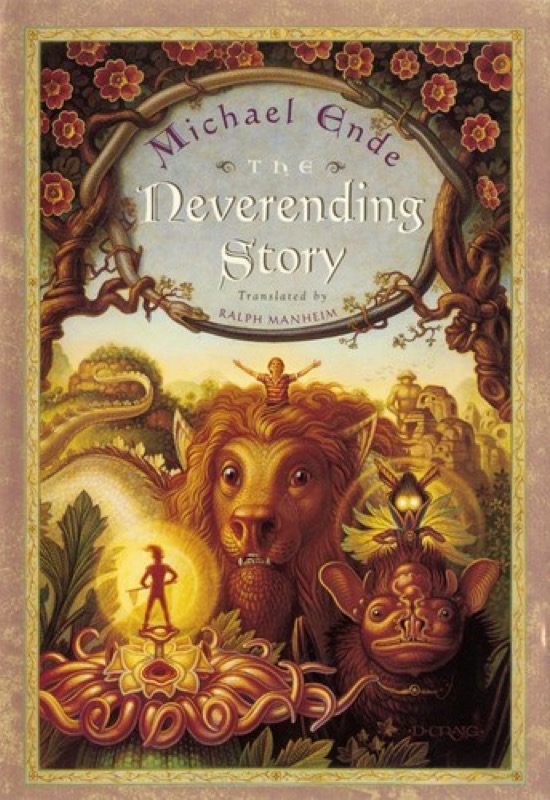
The Neverending Story
Hook & thesis
In Michael Ende’s The Neverending Story, the author delves into the labyrinth of imagination, exploring the profound interplay between reality and fantasy. Verdict: This layered narrative serves as both a whimsical adventure and a poignant reflection on the human condition, making it a timeless exploration of identity and desire.
The contextual pivot
Occupying a unique space in the fantasy-romance genre, The Neverending Story transcends the typical confines of its category. Ende’s work melds rich allegory with an enchanting narrative style, akin to the works of Lewis Carroll and Ursula K. Le Guin, while also appealing to a broader audience with its universal themes of self-discovery and the power of storytelling. The invisible audience here is not just children; it beckons adults into a realm where nostalgia and existential inquiry converge, bridging niche tropes with mass appeal.
Deep-dive critique
Ende’s structural choices—most notably the dual narrative of Bastian’s reality and Atreyu’s quest—create a reflective echo chamber that deepens the reader’s engagement. The pacing oscillates between exhilarating adventures in the land of Fantastica and the more introspective moments in the attic, allowing readers to savor the emotional weight of each character’s journey. The duality of perspectives invites readers to question the nature of their own reality, while the fluidity of time within the story further complicates the relationship between reader and narrative.
Characterization shines particularly in Atreyu, whose bravery and vulnerability are rendered through vivid imagery and poignant dialogue. Bastian’s transformation from a timid boy to a confident protagonist illustrates not just coming-of-age themes but also the deeply human need to connect with one’s desires and fears. However, while the thematic richness is a strength, the occasional lapses into heavy-handedness can disrupt the otherwise elegant prose, leaving some readers yearning for a more subtle approach. The ending, though bittersweet, feels both earned and poignant, tying together the intricate threads of reality and fantasy in a satisfying conclusion.
Discussion launchpad
Ende’s novel prompts a tapestry of polarities that can ignite fervent discussion among readers. On one hand, the playful exploration of fantasy can be viewed as a mere escapism, while on the other, it can be interpreted as a profound commentary on the human experience. Moreover, the shift between childlike wonder and adult introspection could spark debate about the intended audience.
Questions for the room:
- How does The Neverending Story reflect our own desires and fears?
- Can the narrative’s heavy-handed moments be justified in the context of its themes?
- What does the duality of Bastian and Atreyu reveal about identity and growth?
- In what ways does Ende challenge conventional storytelling through his structure?
- Does the novel serve as a criticism of escapism, or does it celebrate the power of imagination?
#TheOrchidRoom #fantasyromance #romantasy #darkromance #comingofage