
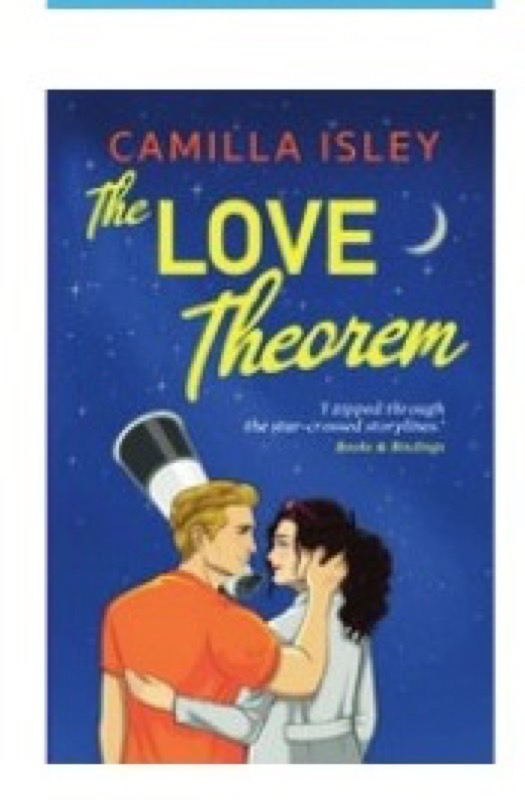
The Love Theorem
Hook & thesis
In Camilla Isley’s The Love Theorem, two fiercely intelligent rivals are thrust together in a battle of wits that unearths not only their simmering attraction but also the vulnerabilities lurking beneath their competitive facades. Verdict: This novel deftly intertwines the complexities of love and rivalry, crafting a narrative that pulses with tension and unexpected tenderness.
The contextual pivot
Positioned within the enemies-to-lovers trope, The Love Theorem carves out its niche in the contemporary romance landscape, especially within the burgeoning arena of STEM-themed literature. Isley’s work resonates with readers familiar with the dynamics of academic rivalries, effectively bridging specialized interests to engage a broader audience. This novel echoes the thematic undercurrents of authors like Sally Thorne and Christina Lauren, yet it stands apart with its nuanced exploration of intelligence as both a barrier and a bridge in romantic entanglements.
Deep-dive critique
The structural integrity of The Love Theorem lies in its dual perspective narrative, which allows readers to delve into the minds of both protagonists, each oscillating between disdain and desire. This pacing choice cultivates a palpable tension that propels the narrative forward, compelling readers to invest in the evolution of both characters. Isley’s prose is sharp and incisive, reflecting the high-stakes environment of scientific competition while simultaneously infusing it with emotional depth. The dialogue sparkles with wit, revealing character motivations and unearthing layers of vulnerability at pivotal moments.
However, the thematic exploration of love as a force that can disrupt entrenched rivalries is occasionally overshadowed by predictable plot beats. While the resolution is satisfying, some readers may find it lacking the surprise necessary to elevate it into the realm of the unforgettable. The emotional stakes, though well-drawn, could benefit from a deeper exploration of the characters’ backstories to further illuminate their transformations.
Discussion launchpad
While The Love Theorem offers a compelling narrative, it invites debate on several fronts, particularly around character development versus plot predictability. The interplay between intellect and emotion raises questions about whether love can genuinely thrive in an environment rife with competition.
Questions for the room:
- Does the rivalry enhance or detract from the romantic tension?
- How effectively does Isley balance the STEM background with romance?
- What aspects of character development felt satisfying or lacking?
- How does the dual perspective impact your connection with the characters?
- In what ways does the ending reflect or subvert genre expectations?
#TheOrchidRoom #enemiestolovers #darkromance #STEM #darkheartlabs