
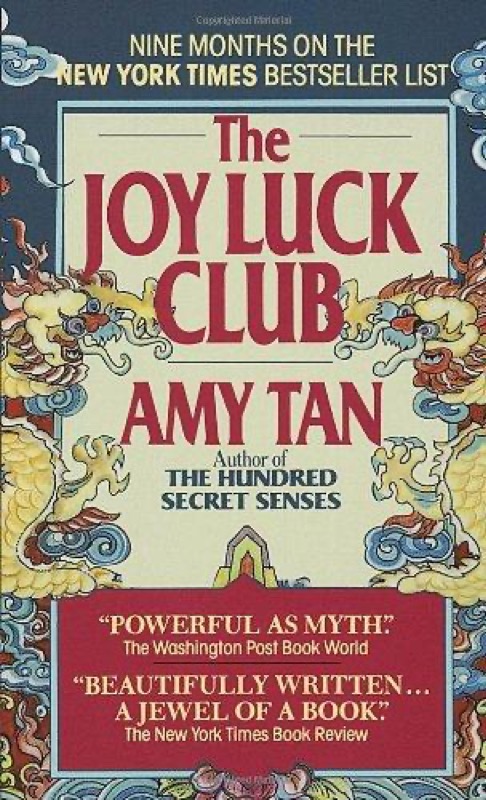
The Joy Luck Club
Hook & thesis
In The Joy Luck Club, Amy Tan intricately weaves the lives of four Chinese immigrant mothers and their American-born daughters, exploring the tensions that arise from cultural displacement and generational misunderstanding. Verdict: This novel serves as a poignant meditation on the complexities of identity and belonging, revealing that the true conflict lies in the struggle to bridge cultural chasms within familial ties.
The contextual pivot
Situated within the realm of literary fiction, The Joy Luck Club stands apart through its exploration of mother-daughter dynamics framed by cultural heritage. Unlike typical narratives in the dark-thriller category, which often prioritize suspense and plot twists, Tan’s work delves deeply into emotional and psychological landscapes. This novel can be positioned alongside works by authors such as Jhumpa Lahiri and Sandra Cisneros, who also dissect the immigrant experience and its multifaceted challenges. The audience appears to be a blend of those familiar with Asian-American narratives and general readers seeking profound insights into family and cultural identity, bridging niche tropes with broader appeals.
Deep-dive critique
Tan’s narrative structure is particularly compelling, employing a series of vignettes that alternate between the mothers’ and daughters’ perspectives. This duality serves to emphasize the generational divide and the contrasting worldviews that fuel conflict. The pacing allows for deep emotional engagement, showcasing moments of vulnerability while maintaining a rhythm that keeps the reader invested. Tan’s prose is lyrical yet accessible, often employing rich imagery that enhances the emotional weight of the characters’ experiences. For instance, the metaphor of the Joy Luck Club itself—a gathering meant to celebrate life while grappling with past traumas—illuminates the underlying theme of resilience amidst suffering.
However, the novel is not without its mechanical flaws. At times, dialogue feels slightly didactic, particularly when cultural lessons appear heavy-handed, which risks alienating readers who might prefer subtler storytelling. Moreover, while the ending is intended to be cathartic, some might argue that it skims over unresolved tensions, making it feel somewhat unearned. The complex interplay of cultural identity, familial loyalty, and personal aspiration leads to a rich thematic tapestry, yet leaves certain threads dangling, inviting critique of how neatly the characters’ arcs resolve.
Discussion launchpad
The novel invites significant debate on the balance between cultural specificity and universal themes. How do the unique experiences of immigrant families resonate with broader audiences?
Questions for the room:
- Does the use of dual perspectives enhance or complicate the narrative?
- In what ways does Tan succeed or falter in portraying the immigrant experience?
- How does the depiction of mother-daughter relationships resonate with contemporary readers?
- Is the ending satisfying, or does it gloss over deeper issues?
- How can we interpret the role of cultural heritage in shaping personal identity within the text?
#LiteraryAnalysis #darkthriller #family #culturalheritage #mother-daughterrelationships #theorchidroom