
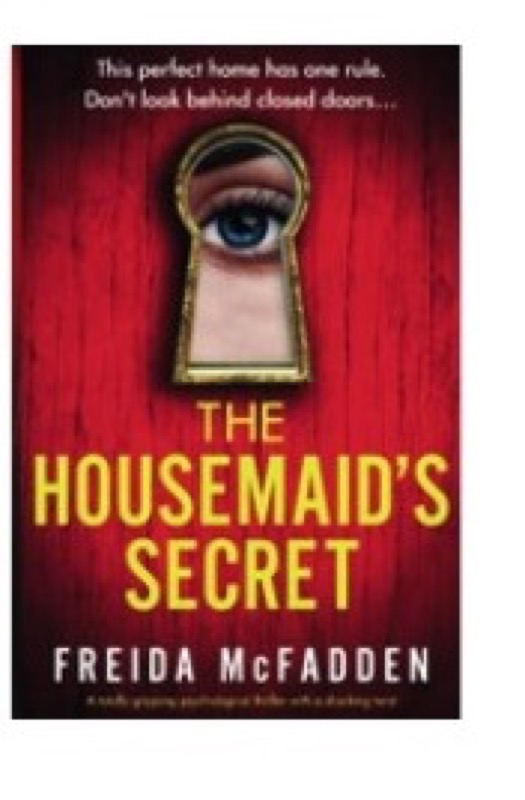
The Housemaid's Secret
This perfect home has one rule. Don't look behind closed doors...
Hook & thesis
In The Housemaid’s Secret, Freida McFadden crafts a tense narrative steeped in domestic suspense, revealing that the most dangerous secrets often lie within the confines of home. Verdict: This chilling exploration of power dynamics and hidden truths offers a haunting reflection on the façade of domestic perfection, ultimately questioning who holds the true power in relationships.
The contextual pivot
This novel sits firmly within the dark-thriller genre, echoing the works of authors like Paula Hawkins and Gillian Flynn, who similarly dissect the complexities of domestic life alongside psychological manipulation. McFadden’s oeuvre often delves into the sinister undercurrents of seemingly mundane settings, making her a worthy contributor to a genre that thrives on the contrast between comfort and terror. The invisible audience here oscillates between those who enjoy psychological explorations of the domestic space and readers drawn to thrillers that unravel as much about the human psyche as they do about the plot.
Deep-dive critique
McFadden’s structure plays with pacing effectively, intertwining present events with flashbacks that gradually unravel the protagonist’s past traumas and motivations. The dual timelines amplify the tension, allowing readers to piece together the mystery while understanding the deep-seated fears that drive the characters. The use of a first-person POV creates an intimate connection to the protagonist, yet it also limits the broader understanding of other characters, sometimes leaving motivations murky.
The prose is sharp, with dialogue that feels naturalistic but often veers into melodrama, particularly in moments of high tension. This is where McFadden stumbles; the emotional weight feels forced at times, undermining the authenticity of the characters’ experiences. World-building is predominantly focused on the home environment, which serves as a claustrophobic backdrop for the unfolding drama. However, some readers may find this setting too restrictive, longing for a more expansive exploration of the characters’ lives beyond the walls of the house. The ending, while shocking, may leave readers polarized; it serves the narrative’s twist but can be perceived as a departure from the psychological depth established earlier in the book.
Discussion launchpad
The interplay of domesticity and danger presents a fertile ground for debate, as it raises questions about the boundaries of trust and the nature of power in relationships.
Questions for the room:
- How does the portrayal of the housemaid challenge or reinforce societal stereotypes about class and gender?
- In what ways does the narrative reflect or subvert traditional thriller tropes?
- Does the ending feel like a natural culmination of the story, or does it undermine the psychological tension built throughout?
- How effectively does McFadden balance suspense with character development, and where does she falter?
- What role does the setting play in shaping the characters’ psyches and choices?
#LiteraryAnalysis #GothicEdge
#darkthriller #romanticsuspense #housemaid