
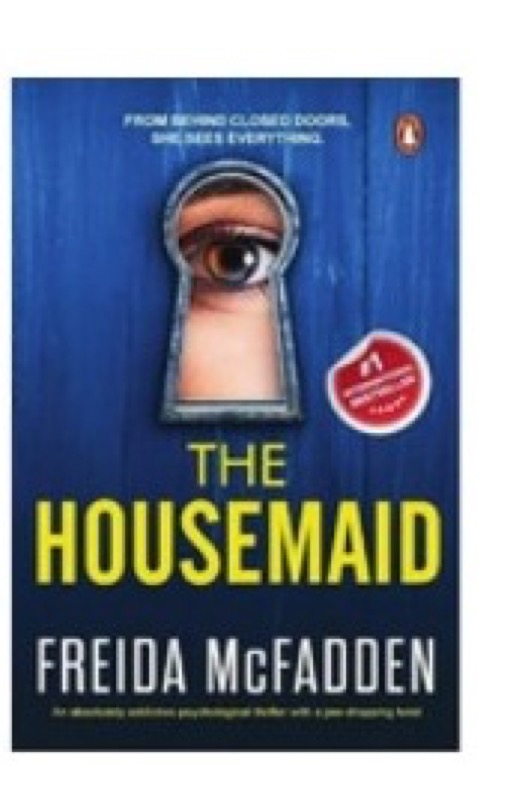
The Housemaid
From behind closed doors, she sees everything.
Hook & thesis
In Freida McFadden’s The Housemaid, the intricate dynamics of power and vulnerability unfold in a tightly woven domestic thriller. The central human conflict revolves around the interplay of trust and betrayal, as a housemaid becomes an unwitting observer to the secrets of her employers. Verdict: McFadden meticulously crafts a chilling narrative that elevates the domestic suspense genre, yet falters slightly under the weight of its tropes.
The contextual pivot
The Housemaid finds its place within the dark-thriller genre, where the domestic sphere often conceals sinister undercurrents. McFadden’s work can be compared to that of authors like Ruth Ware and Lisa Jewell, who similarly explore the complexities of human relationships against a backdrop of suspense. However, McFadden’s narrative leans more heavily on the psychological manipulation inherent in class dynamics, engaging an audience that thrives on tales of domestic intrigue while bridging the gap for general readers through its accessible prose and relatable themes of isolation and desperation.
Deep-dive critique
The structure of The Housemaid employs a first-person point of view that invites readers to sympathize with the protagonist, creating an intimate connection that heightens the tension. The pacing, particularly in the first half, is deliberate, allowing for slow revelations that build suspense effectively. McFadden excels in her use of foreshadowing, subtly hinting at the darker elements of the household without overt exposition, which maintains intrigue. However, the dialogue occasionally suffers from clichéd exchanges that can detract from character depth, particularly in scenes that should be emotionally charged.
Thematically, the book grapples with the idea of the unseen and unheard—the housemaid’s perspective is both a vantage point and a prison, echoing broader societal themes of exploitation and invisibility. Yet, the ending, while satisfactory, could be perceived as a conventional resolution that does not fully capitalize on the book’s initial intensity. The twist feels somewhat predictable, which may leave readers craving a more nuanced conclusion that challenges the established norms of the genre.
Discussion launchpad
The Housemaid presents polarities around class dynamics and moral ambiguity, prompting varied interpretations of character motivations and ethical dilemmas.
Questions for the room:
- How effectively does the first-person POV enhance or limit the story’s impact?
- In what ways does the book challenge or reinforce stereotypes about domestic workers?
- Can the ending be justified as a fitting conclusion, or does it diminish the narrative’s complexity?
- How do the themes of isolation and power resonate with contemporary societal issues?
- What role does foreshadowing play in maintaining suspense, and does it ever feel overdone?
#LiteraryAnalysis #darkthriller #romanticsuspense #housemaid #darkheartlabs