
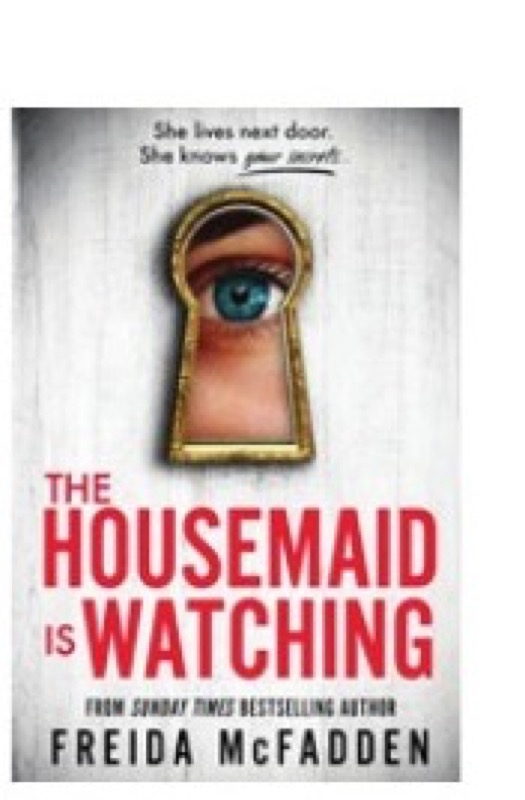
The Housemaid Is Watching
She lives next door. She knows your secrets.
Hook & thesis
In Freida McFadden’s unsettling novel, The Housemaid Is Watching, the facade of domestic tranquility shatters under the weight of obsession. The book deftly explores the complex interplay between vulnerability and predation, revealing how secrets can become both a weapon and a shield. Verdict: This is a chilling exploration of the human psyche that leaves the reader questioning the very nature of trust and safety.
The contextual pivot
Positioned within the stalker-obsession subgenre, McFadden’s work echoes the tension found in psychological thrillers like Gillian Flynn’s Gone Girl and Tarryn Fisher’s The Wives, yet carves its own niche by delving into the domestic sphere with a chilling intimacy. McFadden, known for her ability to weave dark narratives with emotional depth, invites a diverse readership; while her themes resonate deeply with fans of gothic romance and domestic thrillers, they also engage those who appreciate nuanced character studies. The invisible audience is both the thriller aficionado and the casual reader intrigued by the darker corners of human relationships.
Deep-dive critique
McFadden employs a tight, first-person point of view that not only immerses readers in the protagonist’s psyche but also effectively heightens the tension as the narrative unfolds. The pacing is meticulously crafted, with each chapter leaving breadcrumbs of suspense that compel the reader forward, even as they grapple with the visceral discomfort of the protagonist’s situation. The dialogue is sharp and revealing, often laden with subtext that underscores the characters’ hidden motives and desires.
The thematic exploration of surveillance and the nature of obsession is particularly resonant; McFadden’s prose captures the creeping dread of being watched, making the reader acutely aware of the power dynamics at play. However, moments of characterization occasionally slip into cliché, as secondary characters risk becoming one-dimensional archetypes rather than fully fleshed individuals. Still, the ending—though divisive—succeeds in leaving a haunting imprint, posing unsettling questions about morality and complicity.
Discussion launchpad
This novel ignites a complex web of polarities, challenging readers to confront their own perceptions of safety and morality. The juxtaposition of domestic bliss against a backdrop of lurking menace serves as fertile ground for debate.
Questions for the room:
- How does McFadden’s portrayal of the protagonist influence our empathy towards her and the actions she takes?
- In what ways does the setting amplify the themes of surveillance and obsession?
- Is the ending a satisfying resolution, or does it leave too many ethical dilemmas unresolved?
- How do the secondary characters’ motivations shape our understanding of obsession within the narrative?
- To what extent does the author’s craft elevate the genre, and where does it falter?
#TheOrchidRoom #TheHousemaidIsWatching #FreidaMcFadden #stalker #darkromance