
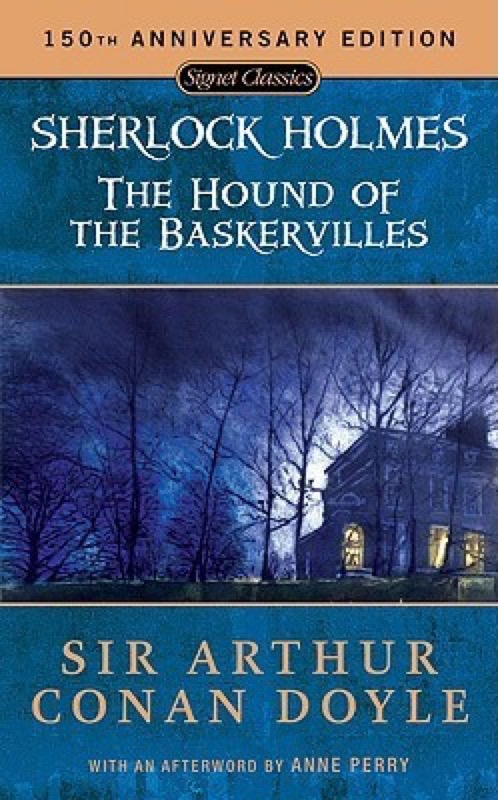
The Hound of the Baskervilles (Sherlock Holmes, #5)
Sherlock Holmes Series
Hook & thesis
Arthur Conan Doyle’s The Hound of the Baskervilles is a masterful exploration of fear, legend, and the interplay between reason and superstition. At its heart lies the chilling question of how far one will go to confront the shadows of the past. Verdict: This novel cements itself as a seminal work in gothic literature, where the true horror emerges not from the supernatural, but from the very human weaknesses it exposes.
The contextual pivot
As a cornerstone of gothic-horror-romance, The Hound of the Baskervilles stands alongside the likes of Bram Stoker’s Dracula and Mary Shelley’s Frankenstein, blending detective fiction with the eerie ambiance of folklore. Conan Doyle crafts a narrative that elevates the supernatural elements of the legend while firmly rooting them in the realm of human experience, making it accessible for both genre aficionados and general readers alike. This duality of audience engagement speaks to Conan Doyle’s ability to transcend niche tropes, inviting a broader contemplation of fear and rationality within the gothic framework.
Deep-dive critique
The structure of The Hound of the Baskervilles is pivotal in maintaining a delicate balance between suspense and revelation. The choice of Watson as a primary narrator allows for a gradual unveiling of the mystery, effectively heightening the tension as he navigates the treacherous moors of Devonshire. This pacing serves to amplify the atmospheric dread that permeates the story. The interplay between Holmes’s rationality and the creeping dread of the hound serves to reinforce the central conflict: the clash between empirical evidence and primal fear.
Conan Doyle’s prose is crisp and evocative, painting vivid images that linger in the mind long after the pages are turned. The dialogue is sharp, particularly in the exchanges between Holmes and Watson, which not only reveal character depth but also invite readers to engage in the detective’s methodical reasoning. However, some may argue that certain characterizations, specifically of the female characters, lack the nuance found in contemporary works, reducing them to archetypal roles that serve the narrative rather than drive it.
The conclusion, while satisfying in its resolution, raises questions about the morality of the characters’ actions and the implications of vengeance. This ambiguity leaves the reader contemplating the ethical boundaries of justice, thus ensuring the novel resonates beyond its pages.
Discussion launchpad
Despite its classic status, The Hound of the Baskervilles invites polarizing opinions on its approach to gender roles and the representation of fear. How does the treatment of female characters affect the overall narrative?
Questions for the room:
- Does the supernatural element enhance or undermine the rationality of Holmes’s character?
- How does the setting of the moors function as a character in its own right?
- In what ways do the themes of legacy and revenge resonate with contemporary societal issues?
- Can the novel’s treatment of justice be reconciled with modern moral standards?
- How do the gothic elements contribute to the story’s tension and overall impact?
#TheOrchidRoom #gothic #horrorromance #detective #classics