
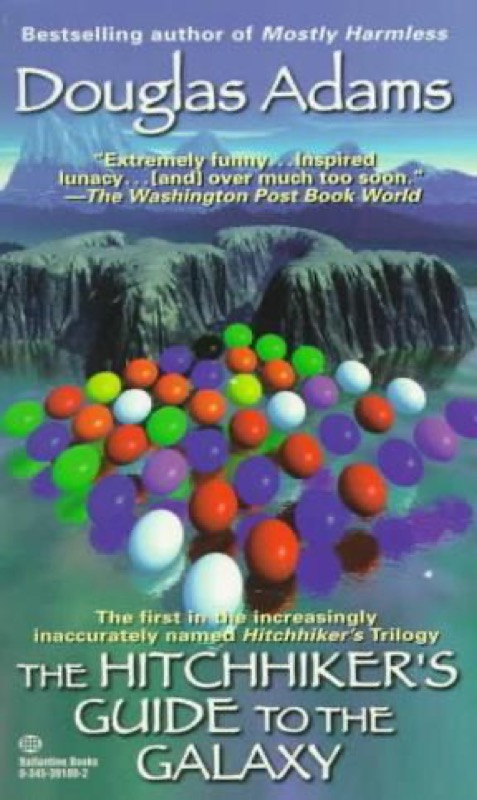
The Hitchhiker's Guide to the Galaxy (Hitchhiker's Guide to the Galaxy, #1)
Hitchhiker's Guide to the Galaxy Series
Hook & thesis
In The Hitchhiker’s Guide to the Galaxy, Douglas Adams crafts a surreal interstellar adventure that masquerades as a comedic exploration of existence, ultimately revealing the absurdity and isolation inherent in the human experience. Verdict: This is a brilliant yet unsettling tapestry of cosmic indifference that challenges the very notion of humanity’s significance amid the dark void of the universe.
The contextual pivot
Positioned within the sci-fi genre, Adams’ work stands apart for its unique blend of humor and existential musings, often drawing comparisons to the absurdity found in the works of Kurt Vonnegut or the dry wit of Terry Pratchett. While ostensibly a light-hearted romp, The Hitchhiker’s Guide resonates with an audience that appreciates the juxtaposition of whimsy and dark themes, appealing to both niche readers and those new to speculative fiction. Adams deftly bridges the gap between traditional science fiction and broader philosophical inquiries, inviting readers to ponder the absurdity of life while traversing galaxies.
Deep-dive critique
Adams employs a non-linear structure that mirrors the chaos of space travel, which serves to amplify the theme of existential absurdity. The pacing fluctuates between frenetic and contemplative, which can occasionally undermine narrative cohesion but ultimately reinforces the notion that life itself is unpredictable. The narrative voice, characterized by its sardonic wit, provides a compelling lens through which readers engage with the bizarre realities of space.
Characterization excels in its idiosyncratic portrayals—Arthur Dent, the bewildered Everyman, navigates a universe that is both vast and dismissive, embodying humanity’s struggle against the cosmic void. Dialogue crackles with humor, yet it often reveals deeper, darker undercurrents; for instance, the phrase “Don’t Panic” becomes a mantra that belies the chaos surrounding the characters.
However, the ending may feel abrupt to those seeking resolution, reinforcing the existential dread that permeates the text. Rather than tying up loose ends, Adams leaves readers suspended in uncertainty, mirroring the precariousness of existence itself.
Discussion launchpad
The interplay of humor and darker themes provides fertile ground for debate among readers, particularly in how Adams’ comedic approach frames serious existential questions.
- Questions for the room:
- Does the humor in the book mitigate its darker thematic elements or deepen them?
- How does the non-linear structure impact your understanding of the narrative?
- In what ways does the portrayal of humanity’s place in the universe resonate with current existential concerns?
- Can this book be classified purely as comedy, or does its underlying darkness elevate it to a more complex critique of existence?
- How does Adams’ work compare to other speculative fiction that tackles similar themes?
#LiteraryAnalysis #GothicEdge #darkthriller #sci-fi #theorchidroom