
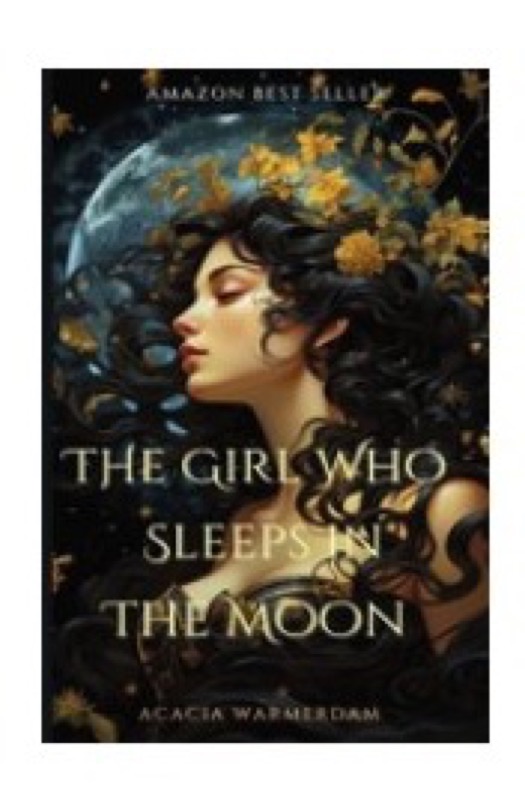
The Girl Who Sleeps in the Moon
The Girl Who Sleeps in the Moon
Hook & thesis
Acacia Warmerdam’s The Girl Who Sleeps in the Moon deftly intertwines the threads of desire and captivity within a lyrical tapestry of dark fantasy. Verdict: Warmerdam crafts a haunting exploration of obsession that ultimately reveals the fragility of freedom within the bounds of love.
The contextual pivot
This novel occupies a distinctive niche within the fantasy-romance genre, echoing elements found in the works of authors like Sarah J. Maas and Naomi Novik, yet it carves its own path through the shadows of obsession and enchantment. Warmerdam’s prose resonates with those who revel in gothic undertones, drawing in readers who appreciate complex emotional landscapes alongside magical realism. The invisible audience consists of fans of darker romantic fantasies that challenge conventional happily-ever-afters, creating a bridge from niche subcultures to broader fantasy readerships.
Deep-dive critique
Warmerdam’s narrative structure employs a non-linear timeline, allowing glimpses into the protagonist’s psyche that deepen the reader’s engagement with her spiraling descent into obsession. By oscillating between past and present, the author masterfully shapes a rhythm that mirrors the protagonist’s own tumultuous emotions, effectively heightening the stakes of her journey. The first-person point of view adds an intimate lens through which we experience the protagonist’s fears and desires, rendering her struggles all the more palpable.
However, while the prose is often lush and evocative, there are moments where the dialogue falters, lacking the sharpness that could propel the tension further. Certain exchanges feel contrived, as though they exist to serve plot rather than character development, which dimmed the emotional weight in key scenes. The world-building, rich in sensory detail, occasionally slips into exposition that disrupts the flow, suggesting a need for greater balance between descriptive passages and action.
The thematic exploration of captivity and the fine line between love and obsession is compelling, yet the resolution may leave some readers yearning for a more definitive conclusion. While the ending is thematically appropriate, it risks alienating those seeking closure in the narrative arc, prompting a reflection on the nature of desire itself—does it liberate, or does it ensnare?
Discussion launchpad
Warmerdam’s novel presents polarities that are ripe for discussion, particularly regarding the ethics of obsession and the portrayal of captivity within a romantic framework. The intersection of dark themes with romantic ideals invites scrutiny—does the romanticization of such obsessions render them more palatable, or does it risk romanticizing unhealthy dynamics?
Questions for the room:
- How do you feel about the portrayal of obsession in romance? Is it a compelling theme or a dangerous trope?
- Do you think the non-linear structure enhances or detracts from the emotional impact of the narrative?
- Was the ending satisfying in its ambiguity, or did it feel like a disservice to the journey?
- How does Warmerdam’s depiction of dreams and magic influence the narrative’s tension?
- In what ways does the novel challenge or reinforce traditional romantic tropes?
#TheOrchidRoom #fantasyromance #darkromance #literaryanalysis #AcaciaWarmerdam