
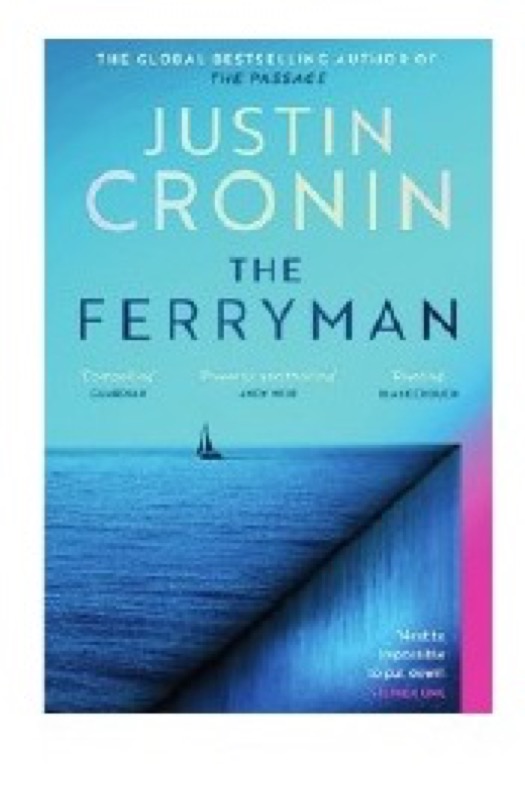
The Ferryman
Hook & thesis
In The Ferryman, Justin Cronin crafts a dark-thriller that interrogates the boundaries of hope and despair in a dystopian landscape. At its core, the novel grapples with the human condition while navigating the churning waters of psychological trauma and societal decay. Verdict: This intricate narrative excels in its world-building but is occasionally undermined by uneven pacing and character development.
The contextual pivot
Positioned within the dark-thriller genre, The Ferryman expands on themes commonly explored by authors like Cormac McCarthy and Margaret Atwood, yet it carves its own niche by intertwining romantic suspense with profound existential questions. Cronin’s prior work, notably the Passage series, hints at his ability to weave intricate plots with rich thematic undertones, suggesting that his audience, while perhaps initially niche, can appreciate broader societal critiques. The book ultimately attempts to bridge the gap between genre-specific tropes and a general readership, challenging preconceived notions of dystopian narratives.
Deep-dive critique
The structure of The Ferryman plays a crucial role in shaping the reader’s experience. Cronin employs a dual timeline that deftly interlaces past and present, allowing the psychological weight of past traumas to resonate throughout the narrative. Yet, while this approach effectively builds tension, it sometimes falters; certain sections feel drawn out, causing the pacing to suffer, particularly in the midsection where character arcs risk stagnation.
Cronin’s prose is richly atmospheric, a strength that vividly constructs the dystopian setting. Descriptions evoke a sense of decay and despair, mirroring the internal states of his characters. However, dialogue occasionally lacks the necessary sharpness to convey the urgency of the narrative, leading to moments where character motivation feels diluted.
Thematically, the novel excels in its exploration of hope amidst hopelessness, raising questions about the nature of salvation and the human spirit’s resilience. Yet, the ending, while thought-provoking, risks alienating readers due to its ambiguity, leaving questions about true resolution hanging in the air.
Discussion launchpad
Cronin’s exploration of dark themes and complex emotional landscapes invites debate over the balance between hope and despair. The narrative’s pacing issues may polarize readers; some may appreciate the slow-burn tension, while others find it frustrating.
Questions for the room:
- Does the dual timeline enhance or detract from the urgency of the plot?
- How effectively does the book balance romantic elements with its darker themes?
- In what ways does the portrayal of dystopia reflect current societal anxieties?
- Is the ambiguity of the ending a strength or a flaw?
- How do Cronin’s character developments influence the overall impact of the narrative?
#LiteraryAnalysis #darkthriller #romanticsuspense #dystopian #darkheartlabs