
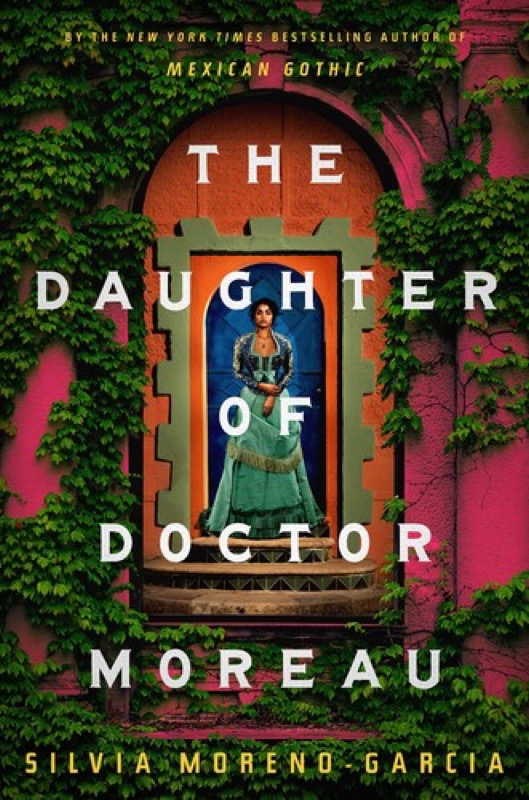
The Daughter of Doctor Moreau
A reimagining of a classic tale exploring love and monstrosity.
Hook & thesis
Silvia Moreno-Garcia’s The Daughter of Doctor Moreau wrestles with the haunting interplay of love and monstrosity, crafting a narrative that questions the very nature of humanity. Verdict: This novel is a darkly alluring exploration of desire and ethical boundaries, where the monsters are both the creations and the creators.
The contextual pivot
Nestled within the gothic-horror-romance genre, this reimagining of H.G. Wells’ The Island of Doctor Moreau deftly straddles the line between literary homage and contemporary critique. Moreno-Garcia draws upon themes of scientific ethics and the complexity of human relationships, reflecting a modern sensibility that resonates with readers who may not typically indulge in genre fiction. By invoking the historical context of Victorian-era scientific experimentation while also addressing the complexities of race and identity, the novel finds a unique position that invites both niche aficionados and general readers into its unsettling embrace.
Deep-dive critique
Moreno-Garcia employs a rich, evocative prose style that immerses the reader in its lush yet claustrophobic world. The pacing is deliberate, mirroring the slow unraveling of the protagonists’ internal conflicts and societal pressures. The dual perspectives of Carlotta and the eponymous Doctor Moreau create a layered narrative; however, certain transitions between their viewpoints occasionally disrupt the flow, leading to moments where the emotional impact feels diluted rather than heightened.
Thematically, the novel excels in its exploration of the boundaries of love and the grotesque. Carlotta’s struggle against the duality of her identity — a product of her father’s experiments yet yearning for genuine connection — evokes strong empathy. The dialogue is particularly sharp, laden with tension that reveals deeper truths about the characters’ motivations and fears. However, the mechanical flaws emerge in the pacing toward the climax; the tension builds effectively, yet the resolution feels rushed, leaving some threads unresolved and the reader craving more depth in the finale.
The world-building is visually arresting, with the descriptions of the hybrid creatures — both beautiful and terrifying — magnifying the novel’s central conflict. The content warnings are significant; the visceral portrayals of animal experimentation and body horror are not merely for shock but serve as a critique of dehumanization and the moral quandaries inherent in the pursuit of knowledge. The ending, while provocative, lacks the catharsis one might seek, raising questions about whether the complexity of the themes is fully realized.
Discussion launchpad
Moreno-Garcia’s work is sure to stir debate, especially concerning the ethical implications of scientific progress and the nature of monstrosity. The novel’s tightrope walk between horror and romance may polarize readers, inviting discussions on the efficacy of blending these genres.
Questions for the room:
- How effectively does the novel balance gothic elements with a modern narrative?
- In what ways do you think the theme of monstrosity reflects current societal fears?
- Does the abruptness of the resolution enhance or detract from the novel’s overall impact?
- How do Carlotta’s and Moreau’s differing perspectives shape our understanding of love and ethics?
- What role does setting play in augmenting the novel’s tension and emotional stakes?
#TheOrchidRoom #gothic #horrorromance #literaryanalysis #darkheartlabs