
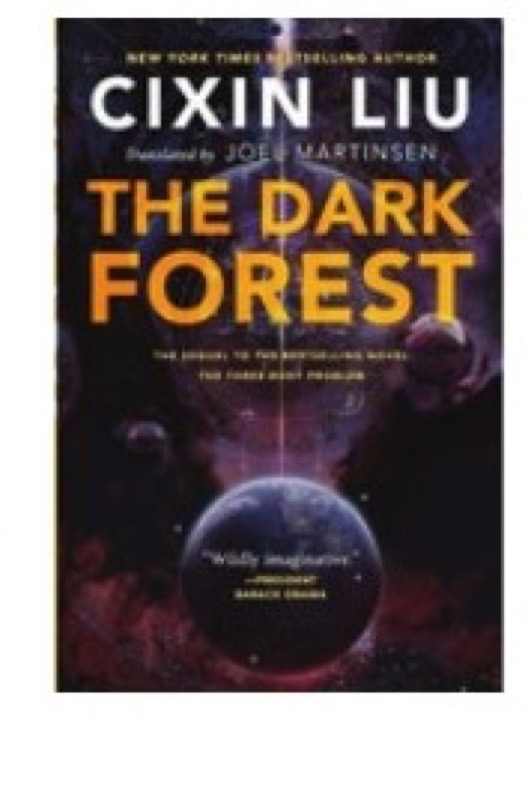
The Dark Forest
The sequel to The Three-Body Problem
Hook & thesis
In Cixin Liu’s The Dark Forest, the true engine of the narrative is a profound exploration of humanity’s struggle against its own existential dread, as much as it is about alien threats. Verdict: Liu crafts a hauntingly beautiful meditation on survival and connection that transcends genre limitations, ensnaring readers in its intricate web of moral quandaries and cosmic stakes.
The contextual pivot
Positioned as the second book in the Remembrance of Earth’s Past trilogy, The Dark Forest intricately blends elements of hard science fiction with undercurrents of philosophical inquiry, borrowing tropes from both fantasy and romance. Liu stands alongside other speculative fiction titans, like Arthur C. Clarke and Isaac Asimov, yet carves his niche by interweaving human emotion with grand cosmic themes. The invisible audience spans both hardcore sci-fi aficionados and general readers seeking introspective narratives; Liu’s deft use of romance as a lens through which to view vast, cold universes makes existentialism palpable and relatable, thus bridging the gap between niche sci-fi and broader literary appeal.
Deep-dive critique
Liu’s structure, marked by alternating perspectives and a nonlinear timeline, serves to enhance the thematic depth of the narrative. This approach imparts a sense of urgency and complexity, as characters grapple with the weight of their choices amidst impending doom. The pacing, however, occasionally falters, particularly when the philosophical discussions overshadow plot progression, risking reader disengagement.
The prose, while richly layered, can sometimes veer into dense exposition, demanding readers’ patience as they navigate the intricacies of Liu’s sci-fi constructs. Characterization shines, especially in the portrayal of Luo Ji, whose internal conflicts resonate deeply, embodying the struggle between individual desire and collective responsibility. Dialogue, often laced with gravitas, elevates the emotional stakes, though at times it can feel didactic, pulling readers out of the immersive experience.
The ending, steeped in ambiguity, challenges readers to reflect on the survival of humanity in a universe indifferent to individual fate, leaving one with a chilling sense of unresolved tension. Liu’s philosophical musings on love, sacrifice, and the human condition enrich the narrative, evoking a sense of melancholy beauty that lingers long after the final page.
Discussion launchpad
The interplay between cosmic dread and human emotion is a fertile ground for debate, explored through the lens of romance within a dystopian framework. How do these elements affect our connection to the narrative and its characters?
Questions for the room:
- How does Liu balance the grandiosity of his themes with the intimate struggles of his characters?
- In what ways does the non-linear structure either enhance or detract from reader engagement?
- Can the romantic elements in the story be seen as a distraction from the overarching sci-fi themes?
- How do the content warnings influence your reading experience and interpretation of the narrative’s moral dilemmas?
- What does Liu suggest about the nature of sacrifice in the face of an indifferent universe?
#TheOrchidRoom #fantasyromance #romantasy #darkromance #hardSF