
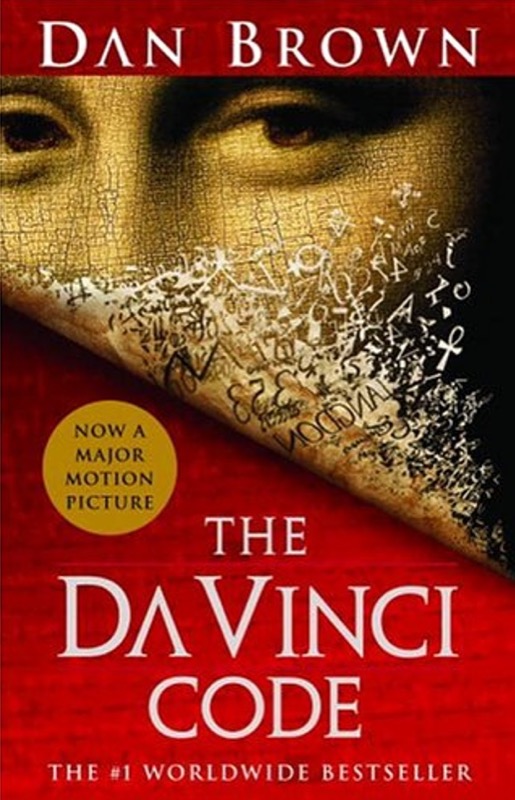
The Da Vinci Code (Robert Langdon, #2)
A murder in the Louvre, a dying curator’s scavenger hunt, and the most successful treasure chase in publishing history — every chapter a door, every door a lecture.
Hook & thesis
The Da Vinci Code is a machine for converting exposition into suspense. Brown’s discovery — the one a thousand imitators copied — is that a lecture becomes a chase if someone is bleeding at the start of it: art history, symbology, two millennia of church politics, all delivered at gunpoint in three-page chapters that end mid-breath. The thesis it smuggles, assembled from Holy Blood, Holy Grail and older heresies, was litigated in an actual courtroom — and its truth value turned out to be irrelevant to its effect, which was to make every finisher feel like an insider to a suppressed history. Verdict: As prose, indefensible; as engineering, close to perfect. Its cost is everything that isn’t pace — character, accuracy, ambiguity, all fed to the machine. The machine didn’t care. Neither did eighty million readers.
The contextual pivot
The Da Vinci Code was published in 2003 and became the defining publishing event of its decade: over eighty million copies, a Vatican condemnation, a bestselling rebuttal industry, and a 2006 London courtroom where the authors of Holy Blood, Holy Grail sued Brown’s publisher and lost — a trial that functioned as the book’s final, perfect publicity chapter, staging its own thesis (suppressed history defended in public) as news. Brown had tested the formula in Angels & Demons; here he perfected it, and the ‘FACT’ page at the front — asserting the accuracy of the book’s descriptions and documents — blurred the line between thriller and revelation in a way no disclaimer could undo. The deeper lineage is the airport thriller crossed with the 1970s heresy paperback: Baigent, Leigh and Lincoln’s speculative history repackaged as a chase. After it, every museum in Europe needed a queue-management plan, and the puzzle-quest thriller became a genre unto itself.
Deep-dive critique
The narration is third person, rotating between Langdon’s chase, Silas’s penance, and the police cordon — cross-cut like a film, chapters of two to four pages ending on withheld information with metronomic discipline. Brown’s real invention is structural: the cliffhanger as a unit of composition, so the book is never read, only continued. The prose is the era’s most prosecuted: dialogue that exists to deliver lectures, characters announcing facts at each other in moving vehicles, italics deployed as a substitute for emphasis and thought. Langdon himself is a camera with a tweed jacket — expertise without interiority — and Sophie, the cryptographer positioned to inherit the quest, mostly spends it being explained to. The accuracy failures are structural too: the thesis requires a Church disciplined enough to suppress a secret across two millennia of schism, and Priory of Sion documents that were a known twentieth-century fabrication, which the FACT page launders into plausibility. And yet the machine works on its own terms so completely that criticism slides off it. Brown located the exact point where a lecture becomes a chase — put a body at the start of it — and an entire industry has been re-locating it ever since.
Discussion launchpad
Not a thriller, exactly — a feeling: the sense of being let in. The argument the book still starts is about what fiction owes the facts it borrows.
Questions for the room:
- The novel opens with a page headed FACT asserting its background’s accuracy. What does that page do to the contract between book and reader — and does the book honor it?
- A cliffhanger every three pages: style, trick, or a genuine formal discovery about how people read?
- The suppression plot requires perfect institutional discipline across two thousand years of schisms. Why doesn’t the implausibility slow anyone down?
- Sophie Neveu is a cryptographer who mostly watches Langdon explain things. What changes if the heir gets to be the explainer?
- The claims are mostly debunked; the sales are mostly unmatched. What did it prove about the market for suppressed history — and who inherited that market?