
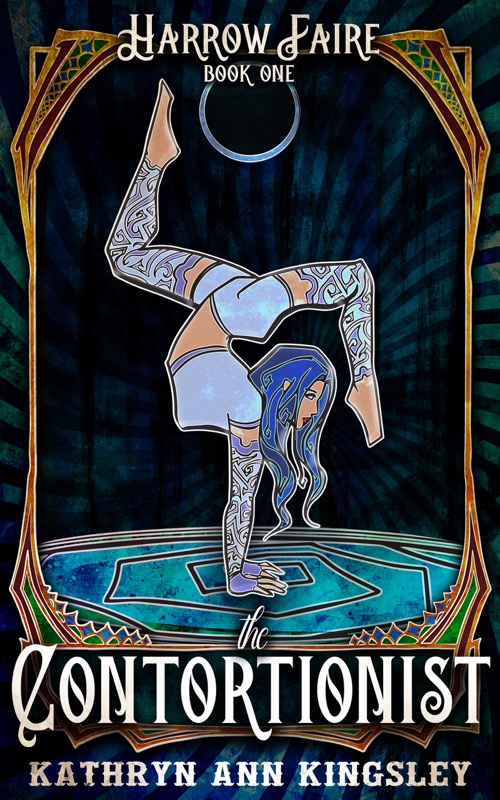
The Contortionist (Harrow Faire, #1)
Harrow Faire Series
Hook & thesis
In The Contortionist, Kathryn Ann Kingsley weaves a haunting tapestry of gothic horror and simmering romance, exploring the depths of human desire and the grotesque forms it can take. Verdict: This novel captivates with its dark allure, but risks losing itself in the very shadows it seeks to command.
The contextual pivot
As the first installment in the Harrow Faire series, The Contortionist nestles comfortably within the gothic-horror-romance genre, drawing from rich traditions of literary forebears like Ann Radcliffe and Shirley Jackson, while modernizing the archetypes for contemporary readers. Kingsley’s work is particularly noteworthy in its balancing act; it caters to both niche enthusiasts of the gothic and a broader audience through its accessible prose and relatable emotional undercurrents. The title alone evokes a sense of the uncanny, hinting at themes of physical and psychological malleability that resonate with readers familiar with the intricacies of human frailty.
Deep-dive critique
Kingsley employs a nonlinear narrative structure that enhances the story’s eerie atmosphere, allowing the reader to unravel the protagonist’s psyche alongside the unfolding mystery. The juxtaposition of past traumas and present desires is executed with a deftness that showcases the author’s understanding of pacing and tension. However, at times, this ambitious structure falters, creating moments where clarity is sacrificed for stylistic flair; certain scenes feel overly convoluted, muddling the emotional impact intended.
Characterization is another stronghold of Kingsley’s craft. The protagonist’s internal struggles are rendered with a rawness that invites empathy, yet the secondary characters often lack the same depth, relegated to archetypical roles that serve the plot more than the thematic exploration. The dialogue, while occasionally sharp and revealing, sometimes slips into exposition that undercuts the organic flow of interactions. Kingsley’s world-building is lush and evocative, painting a vivid picture of Harrow Faire that serves as both a haunting backdrop and a reflection of the characters’ inner turmoil. However, the reliance on gothic tropes could have been subverted more creatively to elevate the narrative beyond expectations.
The climax, while intense, presents a moral ambiguity that may leave readers divided; it raises the question of whether the resolution is earned or merely a product of the elaborate setup. Kingsley’s exploration of dark themes, including mental health struggles, is commendable, yet not without its pitfalls—at times, it feels like an afterthought rather than a fully integrated aspect of the character’s journey.
Discussion launchpad
The intersection of desire and horror brings forth compelling tensions, especially in how Kingsley navigates the complexities of mental health within a romantic framework. This novel is sure to provoke strong opinions on its effectiveness and execution.
Questions for the room:
- Does the portrayal of mental health issues enhance or detract from the romantic elements of the story?
- How do the gothic tropes employed in the novel either support or undermine its overall impact?
- In what ways do you think the structure of the narrative influences your understanding of the protagonist’s journey?
- Are the characters’ motivations believable within the context of the story, or do they feel like contrivances?
- What unresolved themes linger after the climax, and how do they affect your interpretation of the ending?
#TheOrchidRoom #gothic #horrorromance #literaryanalysis #darkheartlabs