
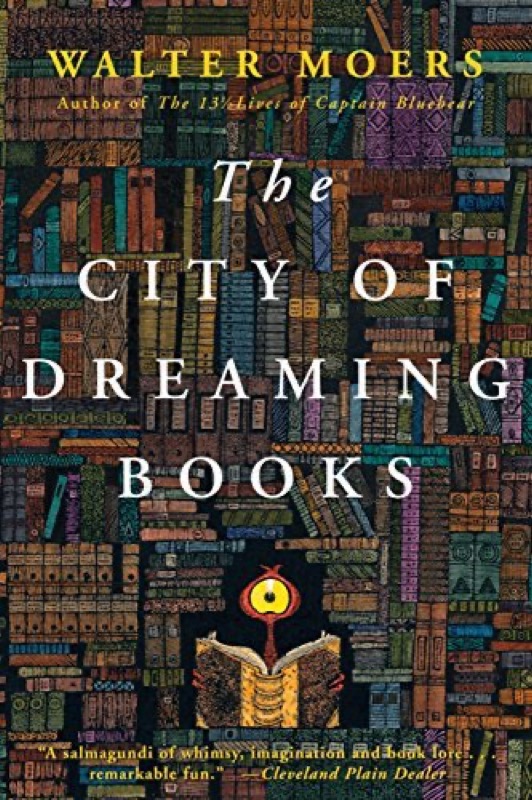
The City of Dreaming Books
Hook & thesis
In The City of Dreaming Books, Walter Moers crafts an enchanting yet perilous homage to literature that dances on the edge of gothic horror and whimsical fantasy. Verdict: This book is an intoxicating exploration of the power of storytelling, where the act of reading becomes a journey fraught with both ecstasy and danger.
The contextual pivot
Moers’ narrative interweaves elements of gothic romance and adventure, situating itself in a niche that celebrates bibliophilia through a vividly imagined world. Within the genre landscape, it resonates with works like The Shadow of the Wind by Carlos Ruiz Zafón, where books are cherished artifacts and the act of reading unveils hidden truths. Moers, known for his previous works such as The 13½ Lives of Captain Bluebear, employs a playful yet dark tone that invites both dedicated genre enthusiasts and casual readers into his labyrinthine universe. The invisible audience here is the literary community that revels in the interplay of danger and the love of books, bridging niche tropes with broader themes of obsession and discovery.
Deep-dive critique
The novel’s structure is a labyrinth itself—pacing meanders between enchanting detours and moments of tension that mirror the protagonist’s psychological journey. The choice of a third-person narrator lends a fairy-tale quality while allowing glimpses into the twisted minds of its characters, particularly in their relationships with books as both objects of desire and peril. Prose flourishes with rich imagery and playful language, such as when Moers describes the city as a “dreaming book” itself, filled with both inspiration and greed.
Moers excels at character development, particularly through the protagonist, who embodies the passionate yet naïve reader—a reflection of our own literary pursuits. Dialogue sparkles with wit, often layering philosophical musings on the nature of storytelling and the dangers lurking within the pages. However, the mechanical execution falters at times, as certain passages may feel overly indulgent, risking reader engagement with excessive detail.
The thematic exploration of obsession is compelling, with the city’s allure representing both the beauty and the darkness of literary pursuit. The ending, while imaginative, may leave some readers feeling unmoored, as it challenges conventional resolutions and asks us to reckon with the stories we choose to embrace.
Discussion launchpad
Moers invites us to contemplate the duality of literature as both a sanctuary and a source of chaos. The novel poses questions about our relationship with books themselves—are they merely vessels of knowledge, or do they hold a deeper, more insidious power?
- Questions for the room:
- How does Moers’ playful style shape your understanding of the darker themes within the narrative?
- In what ways does the city function as a character in its own right?
- Do you find the ending satisfying, or does it leave too many threads unresolved?
- How do the book’s themes resonate with contemporary issues surrounding literature and consumption?
- What role does the fantastical setting play in amplifying the tension between love and obsession?
#TheOrchidRoom #gothic #horrorromance #literaryfiction #booksaboutbooks