
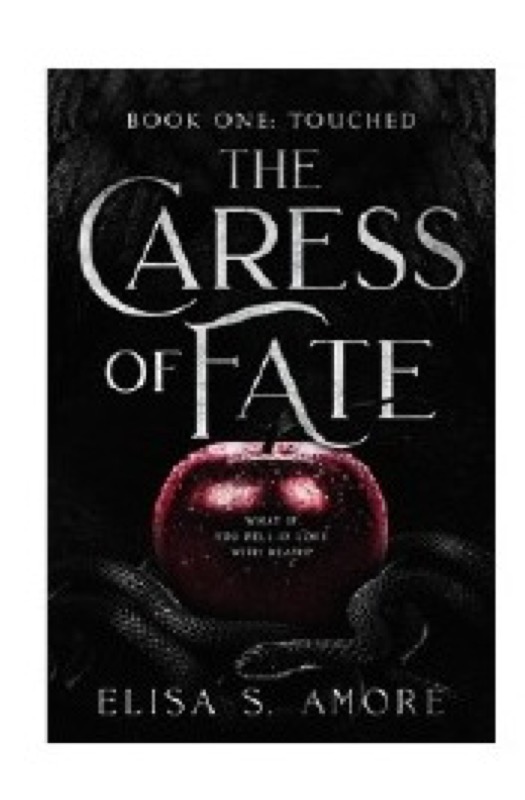
The Caress of Fate
Book One: Touched — What if you fell in love with Death?
Hook & thesis
In The Caress of Fate, Elisa S. Amore explores the intoxicating dance between love and mortality, crafting a narrative that challenges the boundaries of desire and the nature of fate itself. Verdict: This novel seduces with its dark elegance, drawing readers into a world where affection intertwines dangerously with the inevitability of death.
The contextual pivot
Nestled firmly within the gothic-horror-romance genre, Amore’s work invokes the spectral allure of characters like those found in the writings of Anne Rice and the lush, melancholic landscapes of Edgar Allan Poe. Here, the author deftly weaves traditional gothic tropes—such as obsession and the supernatural—into a contemporary narrative that remains accessible to both niche enthusiasts and general readers. The book invites an audience that revels in dark themes while also engaging in a more profound exploration of what it means to confront one’s own mortality through the lens of romance.
Deep-dive critique
The structure of The Caress of Fate unfolds through a series of lushly rendered scenes that oscillate between the palpable tension of desire and the haunting presence of death personified. Amore’s choice of a first-person point of view is particularly effective, allowing readers to intimately experience the protagonist’s emotional turmoil and obsession. The pacing, however, occasionally falters, as certain sections linger too long on atmospheric description at the expense of narrative momentum, which can lead to reader fatigue.
Prose throughout the novel is rich with visceral imagery, yet it sometimes tiptoes into melodrama, particularly in dialogues that can feel overly expository. Nevertheless, when Amore embraces subtlety—such as using snake imagery to symbolize seduction and danger—the text truly shines, evoking a sense of foreboding that enhances the central themes.
The thematic success lies in the exploration of love as a double-edged sword; desire is both a source of vitality and a precursor to inevitable loss. The ending, while dramatic and laden with emotional weight, can leave readers polarized, as it raises questions about the agency of the characters involved in their fates. Is the resolution earned, or does it indulge in the very tropes it seeks to interrogate?
Discussion launchpad
Amore’s novel deftly navigates the fine line between romance and horror, provoking questions about the nature of love and obsession. The tension between passion and danger is a fundamental element that can ignite heated discussion.
Questions for the room:
- How does the personification of death shape our understanding of love in this narrative?
- Do the characters maintain agency in their fates, or are they merely pawns of obsession?
- In what ways does the novel challenge or reinforce gothic romance conventions?
- How effective is the use of symbolism (like snake imagery) in conveying deeper themes?
- What unresolved questions linger after reaching the conclusion of the book?
#TheOrchidRoom #gothic #horrorromance #death #darkromance