
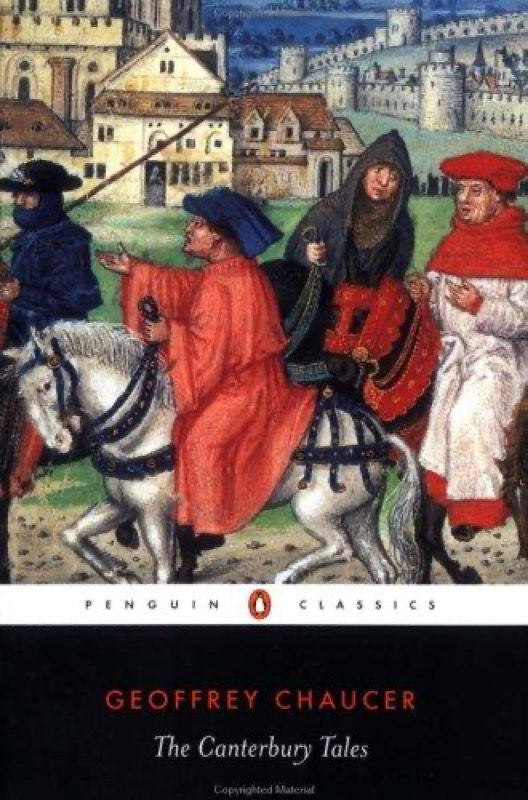
The Canterbury Tales
A collection of stories that explore the complexities of love, morality, and human nature.
Hook & thesis
Geoffrey Chaucer’s The Canterbury Tales serves as a rich tapestry of human experience, reflecting the varied complexities of love, morality, and societal norms through a diverse cast of characters. Verdict: Chaucer masterfully combines humor and critique, illustrating the timeless struggle between personal desires and societal expectations.
The contextual pivot
The Canterbury Tales is a seminal work in medieval literature, often categorized within the frame narrative genre, where multiple stories are woven together. Chaucer, regarded as the father of English literature, uses this structure to bridge the gap between highbrow and popular storytelling. The work sits alongside other classic texts like Boccaccio’s Decameron, offering a glimpse into the social fabric of 14th century England, while also appealing to a broad audience through its relatable themes and vivid characterizations.
Deep-dive critique
Chaucer’s use of a pilgrimage as the backdrop for storytelling allows for a unique exploration of character development and thematic depth, effectively showcasing the different strata of medieval society. The characters, from the noble Knight to the bawdy Wife of Bath, are presented with distinct voices that not only reflect their social status but also reveal deeper motivations and contradictions. The structure, with its alternating tales and interruptions, creates a dynamic pacing that engages readers while mirroring the unpredictable nature of human interactions. Additionally, Chaucer’s use of irony and satire is particularly effective in critiques of religious and social institutions, as seen in the Pardoner’s Tale, which questions the morality of greed. However, the varied quality of the tales can sometimes disrupt the overall cohesion, leaving a few narratives feeling less fully realized. The conclusion of the work is open-ended, inviting readers to reflect on the moral implications of the stories told, an ending that feels both earned and thought-provoking.
Discussion launchpad
The diverse perspectives presented in The Canterbury Tales raise numerous points of contention, particularly regarding the portrayal of gender and morality.
Questions for the room:
- How does Chaucer’s portrayal of women in the Tales challenge or conform to contemporary views?
- In what ways do the tales reflect the social hierarchies of Chaucer’s time, and are these hierarchies still relevant today?
- What is the significance of the pilgrimage framework in shaping the narratives?
- How does humor function in the Tales, and what does it reveal about the characters and their circumstances?
- Are there particular tales that stand out in terms of thematic depth or character complexity, and why?
#LitClass #Grade11 #RequiredReading #classic #medieval