
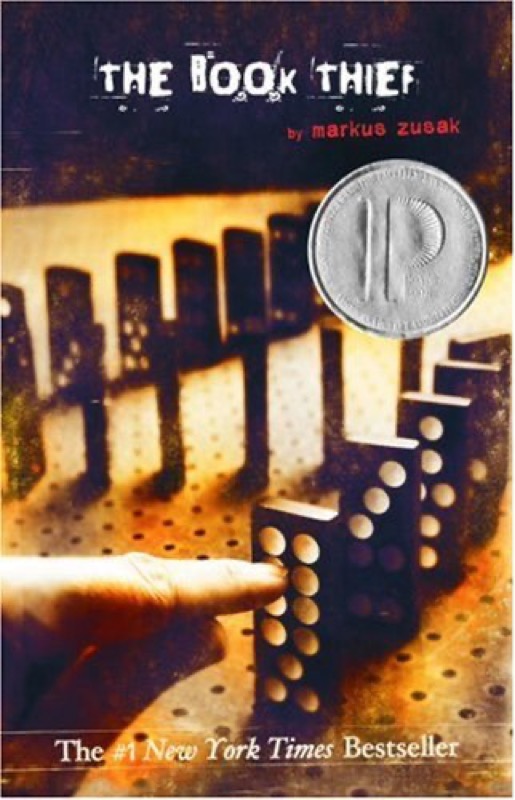
The Book Thief
A poignant story set in Nazi Germany, narrated by Death, exploring themes of loss, love, and the power of words.
Hook & thesis
Markus Zusak’s The Book Thief is an audacious exploration of the human capacity for love in the face of despair, showcasing the power of words as both salvation and weapon. Verdict: This novel is a hauntingly beautiful testament to the resilience of the human spirit, intricately woven with the threads of mortality.
The contextual pivot
Nestled within the gothic-horror-romance genre, The Book Thief occupies a unique space where historical fiction meets poetic narrative. Zusak’s choice to narrate the story through the voice of Death itself positions this work alongside other innovative narratives like The Lovely Bones by Alice Sebold and Atonement by Ian McEwan, which also play with perspective to underscore the weight of loss and memory. Zusak deftly bridges niche themes of mortality and war with broader audiences, creating a reading experience that resonates beyond the confines of its grim setting in Nazi Germany.
Deep-dive critique
The structuring of this novel is both inventive and effective, oscillating between moments of heart-wrenching tragedy and the stark reminders of life’s fleeting nature. The nonlinear timeline, narrated by Death, allows the reader to engage with the characters’ fates in a way that is both intimate and distant, enhancing the thematic resonance of inevitability. Zusak’s prose is lush and vivid, with each page imbued with a lyrical quality that elevates the narrative beyond mere tragedy into a realm of profound beauty. The use of metaphors and similes enriches the text, such as when Death describes colors in a way that reflects the emotional states of the characters.
However, this stylistic choice can also be a double-edged sword. At times, the poetic language may feel overly sentimental, potentially distancing readers from the raw emotional undercurrents. The character development, particularly of the protagonist Liesel, is executed with sensitivity, yet certain supporting characters lack the depth that would make their arcs as impactful as they could be. The climactic moments, while poignant, occasionally tread into predictability, leaving the ending feeling somewhat earned but not entirely surprising.
Discussion launchpad
The dichotomies present in The Book Thief are ripe for discussion, particularly the dualities of life and death, light and darkness, and the moral ambiguities of humanity during wartime. How does Zusak’s choice of Death as a narrator alter our perception of the events?
Questions for the room:
- How does the personification of Death impact your emotional engagement with the story?
- Do you think the lyrical style enhances or detracts from the themes of the narrative?
- What are your thoughts on the balance between historical context and fictional narrative? Does it feel authentic?
- How do the supporting characters contribute to or detract from Liesel’s journey?
- In what ways does the novel challenge or reinforce your understanding of love and loss in extreme circumstances?
#TheOrchidRoom #TheBookThief #historicalfiction #gothicromance #narrativestyle