
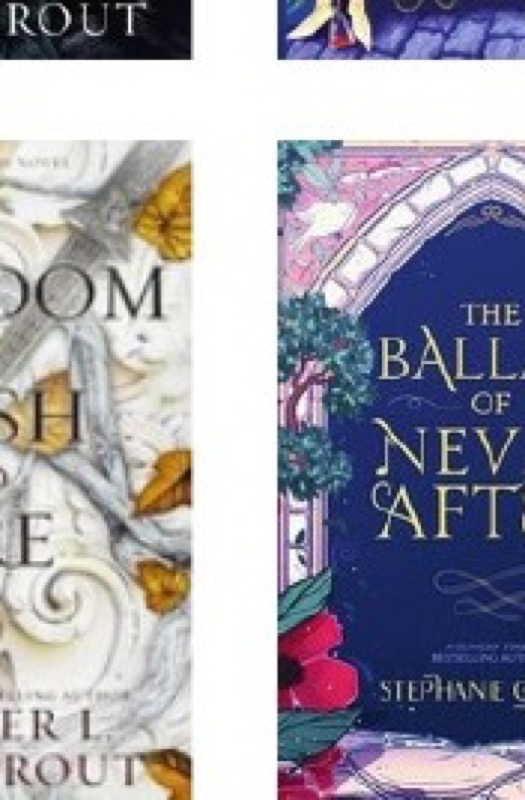
The Ballad of Never After
Hook & thesis
In The Ballad of Never After, Stephanie Garber invites readers to traverse a whimsical yet perilous realm where love and betrayal entwine in a dance as intricate as the threads of fate. Verdict: Garber’s narrative serves as a testament to the complexities of desire, revealing that true passion often blooms in the shadows of heartbreak.
The contextual pivot
Positioned within the young adult fantasy-romance genre, Garber’s work delves into the familiar territory of enchanted realms and star-crossed lovers, yet it does so with a unique flair that distinguishes it from its contemporaries. At a glance, the novel might echo the fantastical narratives of authors like Sarah J. Maas or Leigh Bardugo, yet Garber’s approach leans into the gothic with a tone that mingles whimsy and darkness, drawing in an audience that craves both escapism and emotional depth. The book deftly bridges niche tropes with broader appeal, inviting both the fervent fans of romantic fantasy and those cautiously dipping their toes into the genre.
Deep-dive critique
Garber’s writing exhibits a rich, lyrical quality that enhances the ethereal atmosphere of the story. The structure unfolds through a dual perspective, allowing readers to traverse the minds of both protagonists, which creates a compelling push and pull of emotions. However, this choice also risks diluting the narrative’s tension; at times, the alternating viewpoints can interrupt the momentum, creating a disjointed reading experience. The pacing fluctuates, especially in the middle sections, where character introspection overshadows external conflicts, illustrating a struggle between the internal and external realms of desire and consequence.
Thematic explorations of betrayal and heartbreak are woven intricately into the fabric of the narrative, with Garber employing vibrant imagery and symbolism that resonate with the reader on multiple levels. For instance, the recurring motif of broken mirrors evokes the fractured nature of the characters’ relationships and self-perceptions. Characters are richly drawn, particularly the enigmatic love interest, whose duality reflects the complexity of love itself — beautiful yet destructive. Dialogue sparkles with wit and emotional weight, capturing the tension of unspoken desires and fears, although some exchanges occasionally lean towards melodrama, risking reader immersion.
The ending, while lush with poetic closure, could be perceived as somewhat abrupt, raising questions about the earned resolution of the character arcs. The culmination of events offers satisfaction, yet leaves the reader yearning for more — an intentional narrative choice that resonates with the themes of longing and unattainable love.
Discussion launchpad
Garber’s The Ballad of Never After sparks intriguing polarities regarding the interplay of love and betrayal, and the balance between whimsy and darkness in romance.
Questions for the room:
- Does the dual perspective enrich or detract from the overall tension of the narrative?
- How do the themes of betrayal and heartbreak influence your perception of the romance?
- In what ways does Garber’s prose enhance or hinder the emotional depth of the characters?
- Is the abruptness of the ending a testament to the complexity of desire, or does it fall flat?
- How does the novel’s approach to fantasy shape your expectations of the romance genre?
#TheOrchidRoom #fantasyromance #romantasy #darkromance #onceuponabrokenheart