
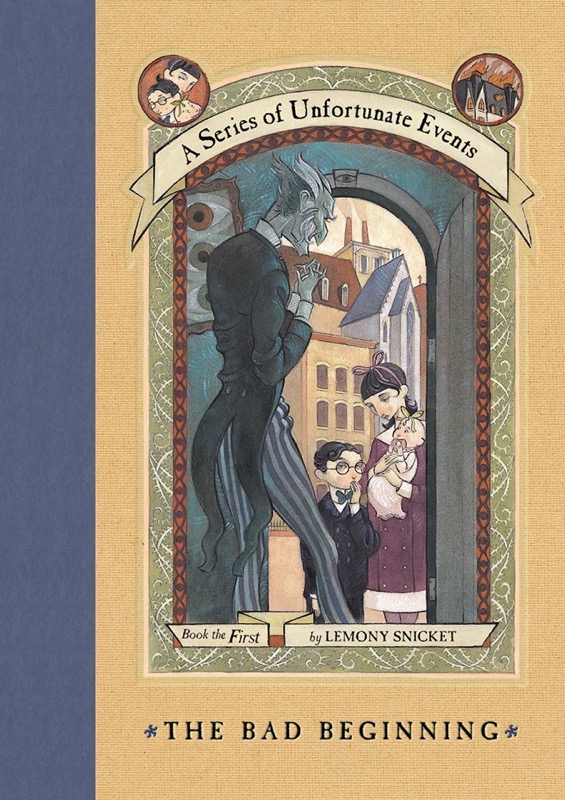
The Bad Beginning (A Series of Unfortunate Events, #1)
A Series of Unfortunate Events
Hook & thesis
In The Bad Beginning, Lemony Snicket crafts a bleak narrative that unflinchingly explores the grotesque realities of childhood adversity through the lens of dark humor. Verdict: This is not merely a tale of misfortune; it is a sharp critique of societal neglect masked in whimsical prose, where laughter and despair coexist in an unsettling embrace.
The contextual pivot
This first installment of A Series of Unfortunate Events marries elements of dark humor with gothic motifs, positioning itself uniquely within the children’s literature landscape. Snicket’s work echoes the absurdities found in Roald Dahl’s narratives while intertwining the darker threads of Edward Gorey’s macabre illustrations. Targeting an audience that straddles the line between youthful curiosity and adult cynicism, Snicket’s prose invites a diverse readership, making the perils faced by the Baudelaire orphans resonate beyond mere entertainment into a reflection of real-life traumas. The book’s willingness to confront themes of neglect, death, and abuse stands in stark contrast to the often sanitized narratives in children’s fiction.
Deep-dive critique
Snicket’s structural choices reinforce the narrative’s tension and underpin its central themes. The nonlinear timeline, punctuated by the narrator’s interjections, maintains a brisk pacing that often feels jarring, mirroring the chaos in the Baudelaire orphans’ lives. The distinct use of a second-person perspective draws readers directly into the calamity, creating an immersive experience that simultaneously distances and engages. Snicket’s prose excels with its playful yet poignant language, employing irony and repetition to emphasize the absurdity of the children’s plight. However, the overtly didactic nature of the text can sometimes falter, leaving readers grappling with the moral implications rather than being fully absorbed in the story. Character development, particularly of the orphans, is compelling yet tragically concise; the lack of depth in the villainous Count Olaf serves to amplify his menacing role, though it risks reducing him to a caricature of evil rather than a fully realized antagonist. Ultimately, the ending, marked by unresolved despair, resonates profoundly, leaving readers with a lingering sense of unease that is both earned and unsettling.
Discussion launchpad
The interplay of dark themes and humor in The Bad Beginning raises questions about the appropriateness of tragedy in children’s literature and what it reveals about societal values.
Questions for the room:
- Can humor effectively coexist with serious themes, or does it undermine the gravity of the message?
- How does Snicket challenge or reinforce the archetype of the orphan in literature?
- In what ways does the book reflect on real-world issues of neglect and abuse?
- Are the gothic elements a necessary component of the narrative, or do they distract from the central themes?
- What might the implications be if this book were adapted into a different medium, such as film or stage?
#LiteraryAnalysis #GothicEdge #TheOrchidRoom #darkthriller #darkhumor #childneglect