
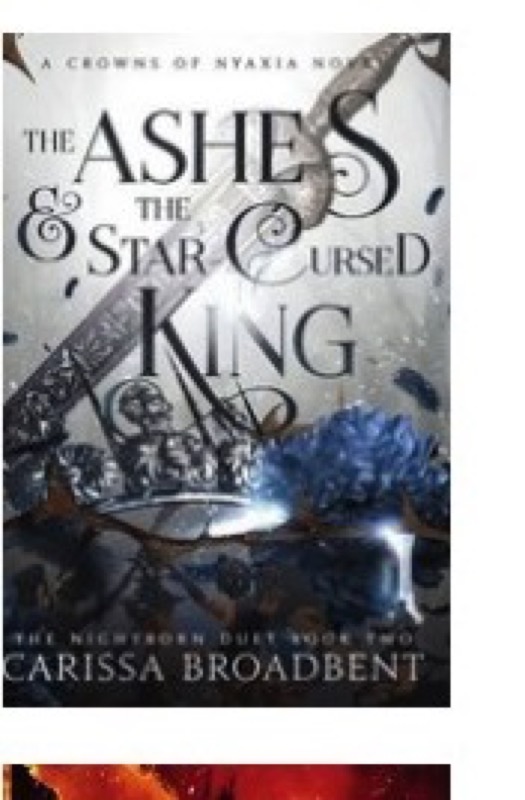
The Ashes & the Star-Cursed King
The Nightborn Duet Book Two
Hook & thesis
Carissa Broadbent’s The Ashes & the Star-Cursed King artfully intertwines themes of power, betrayal, and forbidden love within a vampire paradigm, creating a tapestry rich in gothic allure. Verdict: This book deftly amplifies the tension between desire and danger, challenging our understanding of loyalty and vengeance through its captivating, if tumultuous, romance.
The contextual pivot
Nestled within the vampire-paranormal genre, Broadbent’s work builds on the traditions of dark romance while subverting expectations with its intricate world-building and character complexity. It pays homage to the gothic heritage—think Anne Rice tempered with the fiery passion of A Court of Thorns and Roses. The author’s exploration of the supernatural as a lens for human emotions places her among contemporary peers like Sarah J. Maas and Jennifer L. Armentrout, yet she carves a distinct niche that may appeal to both genre aficionados and casual readers drawn to intense emotional journeys.
Deep-dive critique
Broadbent’s narrative structure capitalizes on dual perspectives, allowing readers to experience the internal conflicts of both protagonists as they navigate their fiery antagonism and undeniable attraction. The pacing, at times frenetic, mirrors the characters’ emotional turmoil, though it occasionally falters in moments where the tension could be drawn out to enhance stakes. Character dialogues crackle with a sharpness that reveals hidden motives and unresolved desires, but some exchanges risk veering into melodrama, pulling the reader out of their immersion.
The thematic exploration of grief and betrayal is woven seamlessly into the fabric of the characters’ relationships, making their conflicts resonate profoundly. Broadbent excels at crafting vivid imagery that evokes the oppressive atmosphere of her dark world, yet certain elements could benefit from deeper exploration—specifically, the nuances of the characters’ motivations, which sometimes emerge as archetypal rather than fully realized individuals. The ending, while climactic, walks a fine line between satisfying and predictable; however, it does raise questions about the implications of power dynamics within relationships, leaving a lingering sense of unresolved tension.
Discussion launchpad
The novel raises compelling questions about loyalty, agency, and the nature of desire within oppressive circumstances. Questions for the room:
- How do the characters’ motivations align with or defy traditional vampire tropes?
- In what ways does the dual perspective enhance or complicate the narrative’s tension?
- Can the elements of grief and betrayal in this love story be seen as a critique of romantic idealism?
- How does the pacing affect our emotional investment in the characters?
- Do you find the ending a fitting resolution, or does it leave too many threads dangling?
#TheOrchidRoom #vampire #darkromance #literaryanalysis #crowns_of_nyxia