
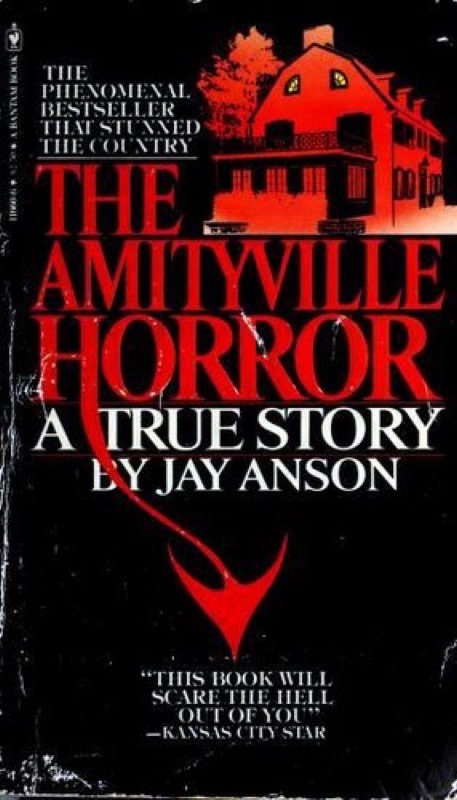
The Amityville Horror
Hook & thesis
In Jay Anson’s The Amityville Horror, the interplay between mundane domesticity and the grotesque suggests that the true terror lies not just in the supernatural, but in the unraveling of the human psyche. Verdict: This book is a haunting exploration of how fear seeps into the very fibers of family life, leaving a chilling echo that lingers long after the last page.
The contextual pivot
The Amityville Horror occupies a unique space within the gothic horror-romance genre. It straddles the line between true crime and supernatural fiction, creating a narrative grounded in real events yet infused with the ominous atmosphere characteristic of gothic literature. Anson’s work can be seen as a precursor to contemporary horror that blends family dynamics with the paranormal, akin to Shirley Jackson’s The Haunting of Hill House or even Stephen King’s The Shining. The book’s invisible audience may include both horror aficionados and those drawn to the psychological intricacies of domestic life, effectively bridging niche tropes to a broader readership.
Deep-dive critique
The narrative structure of The Amityville Horror unfolds through a first-person account, allowing readers to delve into the unsettling experiences of the Lutz family. Anson employs pacing that mimics the gradual intensification of dread, expertly using mundane details to create an unsettling juxtaposition against the increasingly bizarre occurrences. This craft choice successfully builds tension, as the reader is drawn deeper into the family’s disintegration.
Character development, while occasionally reliant on archetypes, evokes empathy as the Lutzes confront ever-mounting horrors. The dialogue is particularly sharp in its depiction of familial conflict, often blurring the lines between the emotional and the supernatural. However, the reliance on certain cliches within the genre, such as the ominous house and the tormented family, can detract from the originality of the narrative.
The thematic exploration of fear—both of the unknown and of one’s own family—resonates powerfully throughout. Anson captures the essence of dread that intertwines with the domestic sphere, suggesting that true horror is not merely external but emerges from within. Yet, the ending feels somewhat rushed and lacks the emotional payoff required to fully immerse the reader in a resolution, raising questions about whether the climax is truly earned.
Discussion launchpad
The Amityville Horror elicits polarizing sentiments that may stir passionate debate among readers. The interplay of supernatural elements with psychological suspense raises questions about the nature of belief and skepticism, challenging readers to confront their own interpretations of fear.
Questions for the room:
- Does the book effectively balance the supernatural with psychological horror, or does it lean too heavily on tropes?
- How does Anson’s portrayal of the Lutz family impact the reader’s empathy towards them?
- In what ways does the setting of Amityville serve as a character in its own right?
- What role does the true crime aspect play in shaping your perception of the events described?
- Do you feel the ending satisfactorily resolves the central themes of the narrative?
#TheOrchidRoom #gothic #horrorromance #hauntedhouse #literaryanalysis