
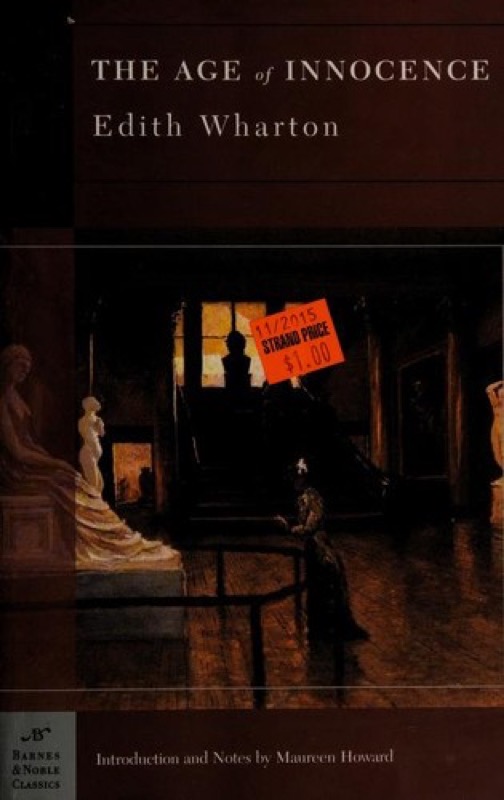
The Age of Innocence
A tale of love and societal constraints in 19th century New York.
Hook & thesis
Wharton’s The Age of Innocence serves as a haunting exploration of the collision between individual desire and societal expectation. Verdict: Wharton masterfully dissects the suffocating constraints of Gilded Age New York, revealing how the bonds of love are often entwined with the shackles of duty.
The contextual pivot
Set against the backdrop of late 19th century New York, this novel straddles the genres of literary fiction and historical romance, drawing readers into a world defined by rigid social mores and class disparity. Wharton’s work aligns with the traditions of other authors like Henry James, yet she carves out her own niche by foregrounding the feminine experience, showcasing the subtle ferocity of a woman’s struggle within patriarchal confines. The book’s appeal extends beyond niche romance readers; it bridges the gap to general audiences through its timeless themes of forbidden love and societal critique.
Deep-dive critique
Wharton’s narrative structure employs a third-person omniscient point of view, allowing the reader to traverse the inner worlds of her characters while maintaining a critical distance. This choice serves to amplify the tension between Newland Archer’s desires and the expectations imposed by his society. The pacing is deliberate; the slow unraveling of Archer’s internal conflict mirrors the oppressive weight of the societal norms he grapples with, enhancing the novel’s thematic depth. Wharton’s prose dances between the lyrical and the incisive, as seen in her vivid descriptions of New York’s elite circles, which create a palpable sense of entrapment.
Characterization excels in the portrayal of Archer and Ellen Olenska, both of whom embody the struggle against their prescribed roles. Their longing is understated, yet it radiates through Wharton’s careful attention to psychological nuance. Dialogue, particularly in social settings, is rich with subtext — every word laden with unspoken implications, revealing the intricate dynamics of power and desire. However, some readers may find the ending unsettling; while it is thematically earned, it doesn’t provide the resolution that one might hope for in a romance, leaving an air of melancholy that resonates long after the final page.
Discussion launchpad
The polarities within The Age of Innocence ignite compelling debates about the nature of love versus duty, and the price of societal compliance. The novel raises questions about individual happiness and the sacrifices made at the altar of societal acceptance.
- Questions for the room:
- How does Wharton’s portrayal of societal expectations resonate in today’s context?
- Are Newland Archer’s choices ultimately heroic or cowardly?
- What does the ending suggest about the possibility of true freedom in love?
- How do Wharton’s depictions of class disparity influence our understanding of the characters’ choices?
- In what ways does the novel challenge or conform to traditional romantic tropes?
#TheOrchidRoom #forbiddenlove #darkromance #historical #society