
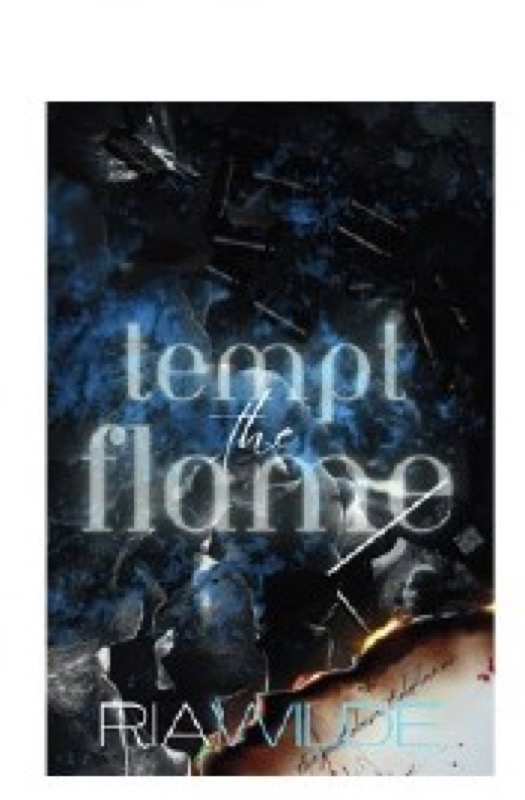
Tempt the Flame
Hook & thesis
In Ria Wilde’s Tempt the Flame, the author deftly explores the destructive allure of forbidden love against a backdrop of emotional intensity and dark themes. Verdict: This book masterfully ignites desire while exposing the complex interplay between passion and peril, leaving readers breathless and questioning their own boundaries.
The contextual pivot
Tempt the Flame sits comfortably within the forbidden-love subgenre, a space often dominated by the likes of Anaïs Nin and E.L. James, yet Wilde carves her niche with a contemporary lens that blends gothic elements with raw realism. While the narrative is steeped in darkness and emotional turmoil, it also speaks to a broader audience by tapping into universal themes of longing and consequence. Wilde’s body of work hints at a fascination with the darker corners of human relationships, and this title serves as an accessible entry point, seamlessly bridging niche tropes with mainstream appeal.
Deep-dive critique
Wilde’s craft shines in her evocative prose, which weaves a tapestry of vivid imagery and palpable tension. The structure, while linear, employs a tight pacing that mirrors the characters’ escalating emotions — each moment fraught with anticipation that keeps readers on edge. The dual perspectives of the protagonists enhance the narrative’s depth, allowing us to see the internal conflict that fuels their desires. However, the dialogue occasionally falters, veering into melodrama that threatens to undermine the novel’s tension. The emotional stakes feel authentic, yet the characters occasionally slip into archetypes, making their journeys predictable.
The thematic exploration of desire versus morality is where Wilde truly excels. The characters’ struggles with their choices resonate, amplifying the stakes of their forbidden love. Yet, the ending, while dramatic, leaves some threads unresolved, raising questions about accountability and consequence that linger beyond the final page. This ambiguity may frustrate some readers, but it also invites deeper contemplation on the nature of love and its potential for destruction.
Discussion launchpad
The interplay of fire and smoke serves as a metaphor for the characters’ passionate entanglements, igniting debate on the nature of desire and its risks. The emotional intensity creates a chasm between those who revel in the thrill of the taboo and others who recoil at the potential fallout.
Questions for the room:
- How do you interpret the duality of desire and danger in the characters’ relationship?
- Do you think the emotional stakes justify the choices made by the protagonists?
- How does the blend of gothic romance with contemporary issues affect your reading experience?
- Can a love story rooted in darkness ever offer redemption, or is it doomed to tragedy?
- What role does setting play in shaping the narrative’s emotional landscape?
#TheOrchidRoom #forbiddenlove #darkromance #fire #literaryanalysis